|
Films marked † are known to exist; this indication is not complete.
Films marked * are included in The Movies Begin: A treasury of early cinema 1896-1906, Volume 2 (The European Pioneers).
• 1901
¶ Laura Bayley for GAS Films
The Death of Poor Joe †

—A scene from Charles Dickens' Bleak House in which the ragged crossing sweeper Joe (Laura Bayley) dies in the arms of the watchman (Tom Green). (March, 70ft.) This is the earliest known film of a Dickens subject. Regarded as lost until a copy donated to the BFI by Graham Head in 1954 but incorrectly catalogued was rediscovered in March 2012. Shot with the bright sunlight through the trees streaking across the backdrop in St Ann's Well Gardens, which coincidentally coule be seen as driving snow.
View online.
Dogs in the Surf
—Issued in a 17.5mm Biokam version.
A Photograph Taken from Our Area Window †
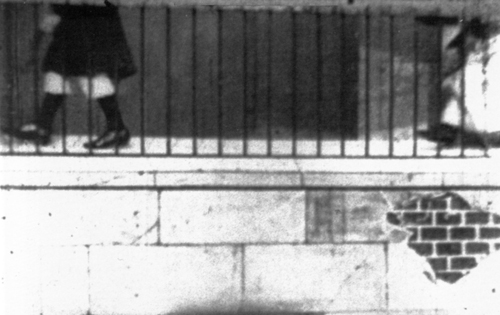
Alt titles Study in Feet and Story Told by Feet Only Seen Through Railings)
—A number of legs are seen walking past the basement window: a man and woman meet and he ties her shoelace, a washerwoman rubs her leg, a gentleman picks up a fallen cloth. A most unusual—even avant garde—concept for a film at that time. Two shots (August, 44ft and 100ft). Also released in a 17.5mm Biokam version.
View online (BFI Player).
¶ Laura Bayley away from Brighton
London Street Scenes series
—Hyde Park Corner Looking East; Pall Mall Looking East.
—Released as Pall Mall and Hyde Park Corner in a 17.5mm Biokam version.
View online (BFI Player).
¶ G A Smith for GAS Films/Warwick Trading Company
The Adrian Troupe of Cyclists
—(September, 150ft.)
The Bill Poster's Revenge
—A billposter changes half of each of his rival's posters.(May, 50ft.)
A Good Story
—A monk tells a risky story to the brothers. (August, 50ft.)
The Kitten Nursery
—A boy gives a kitten spoonfuls of milk. A trial run for The Little Doctor and the Sick Kitten? (June, 100ft.)
In the Green Room
—An actor prepares to appear as the giant in Jack and the Beanstalk. (October, 100ft.)
The Last Glass of the Two Old Sports
—Another in the series featuring Tom Green and J D Hunter. (June, 50ft.)
The Little Doctor and the Sick Kitten
Alt titles The Little Doctor, The Sick Kitten)
—(June, 50ft.) Remade in 1903 (see below).
The Monocle: Me and Joe Chamberlain
—A man tries to copy the appearance of Joseph Chamberlain in a cartoon. Described as a rapid cartoon sketch. A rare political reference in films of the period. Chamberlain was a Liberal MP and one of the most popular and influential politicians of his day. (50ft.)
Whisky versus Bullets
—A man fails to shoot himself so drinks whisky instead. (March, 50ft.)
¶ G A Smith for Warwick Trading Company away from Brighton
Bicycle Race at the Crystal Palace
—(100ft.)
Corpus Christi Procession at Naples
—(100ft.)
Crystal Palace series
—Incidents from the Battle of Trafalgar (50ft), Water Carnival (75ft), Water Pantomime (50ft)
Naval Demonstration: SS Ophir
—(50ft.)
Venice and the Grand Canal
—Filmed from a boat. Possibly shot in 1904.
Visit to Pompeii
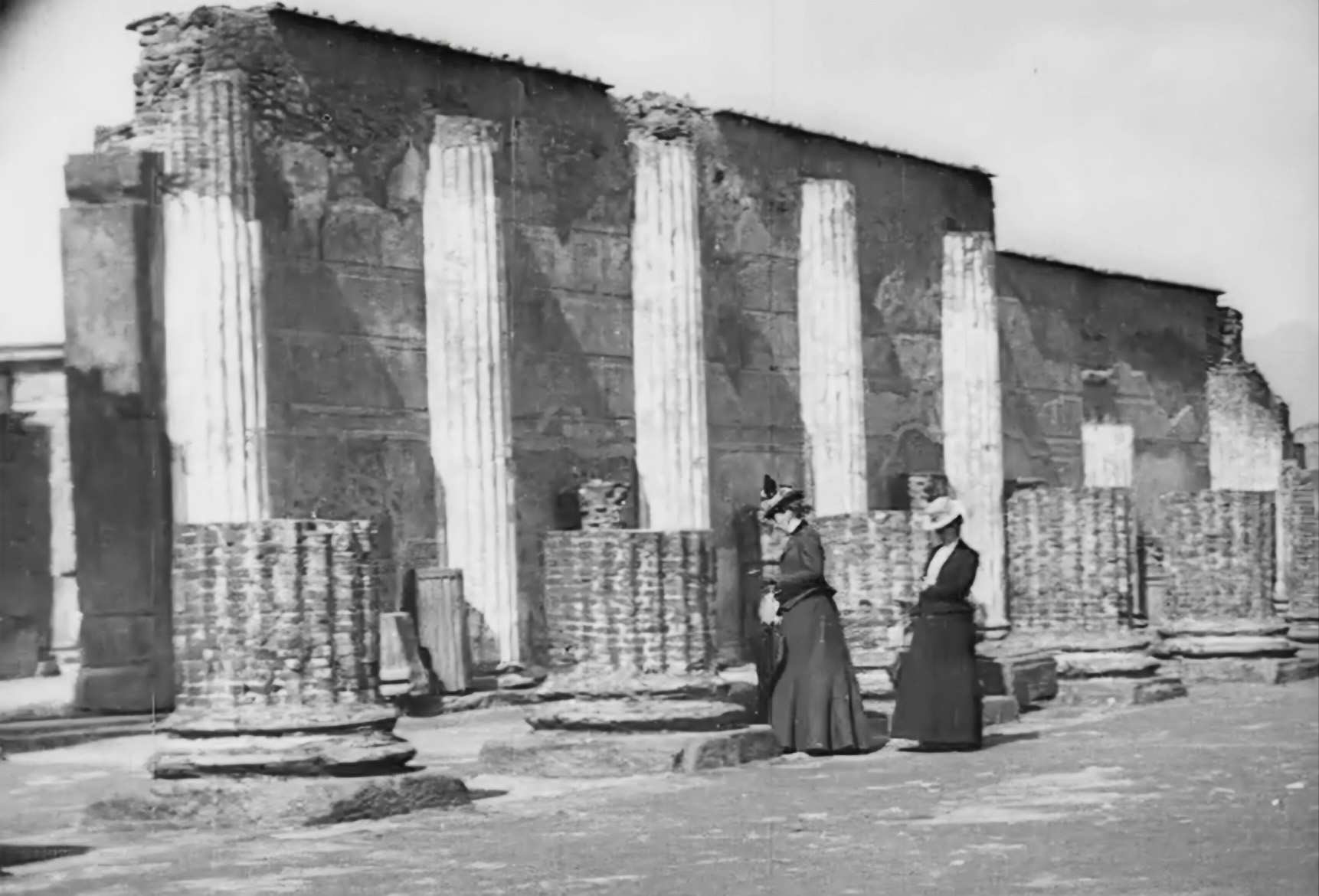 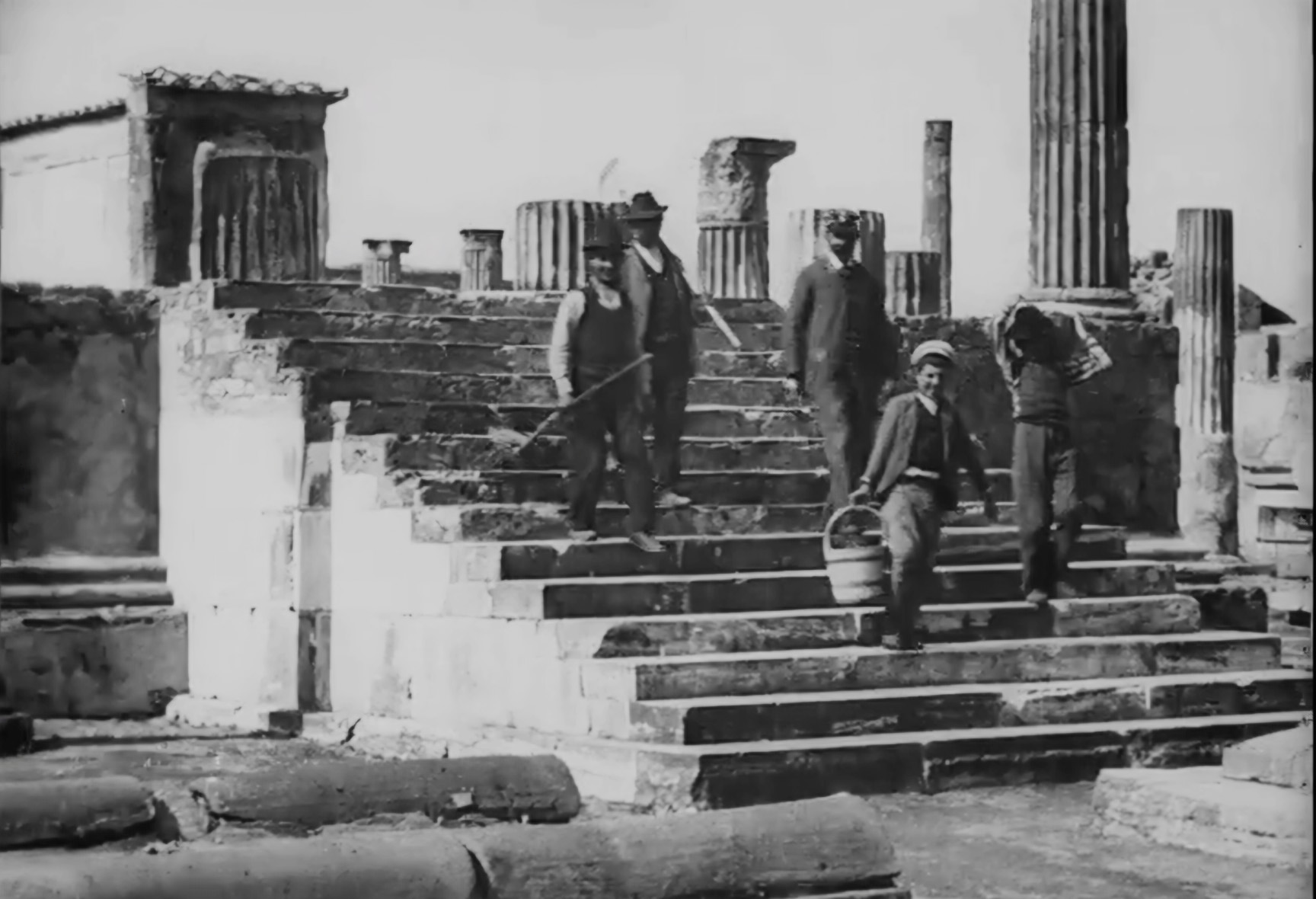 
—Several scenes, including panning shots of the ruins with visitors looking round and workers carrying (presumably) spoils, the funicular up Vesuvius (one shot from a moving car) and shots of Vesuvius erupting in clouds of smoke. (8 mins 26 secs.)
View online (BFI Player).
Includes
Naples and Vesuvius
—(50ft.)
Panorama of Naples Harbour
—(50ft.)
Vesuvius in Eruption
—(50ft.)
¶ James Williamson for Williamson Kinematograph Company
Are You There?

US title A Telephone Romance.
—Features Sam Dalton. A telephone conversation between a young man and his girlfriend, shown in split screen (actually a set constructed on similar principles), is interrupted by her father. In a second shot the father attacks the young man with his umbrella. (October, 75ft.) Released in the US by Biograph and Kleine, September 1902.
View online (BFI Player. View online (YouTube).
Bicycle Polo
—Sporting actuality. (200ft._
The Big Swallow †*
  
US title A Photographic Contortion, alt titles I Won't, I Won't, I'll Eat the Camera First, The Swallower
—Features Sam Dalton. Perhaps the first time that the camera becomes part of the action, rather than merely observing it, making it the first metafictional (self-referential) film. ‘A prominent actor with wonderful talent for facial contortion is standing some distance from the camera. As the film is set in motion, he walks toward the lens until his head grows into enormous proportions. He then stands so close to the camera that every wrinkle in his face, and in fact, the pores of his skin are plainly shown and greatly magnified. As he comes closer to the lens he opens his mouth wide, and is biting at the instrument all the while. He is then seen to swallow the camera, operator and all. He is next seen backing away from the instrument, smacking lips and rubbing his stomach in great glee. Very funny and a great hit.’ (Edison catalogue) (October, 60ft.) Released in the US by Edison, September 1902.
View online (BFI Player). View online (YouTube).
Cyclist Scouts in Action
—Wartime incident reconstruction: a Boer shoots a cycling messenger then is himself shot. (October, 150ft.)
The Elixir of Life
—features Sam Dalton. ‘An old, grumpy-looking individual is seated behind a table, on which a black bottle and a tumbler is placed. From the expression on his face one would think he was suffering from a bad case of indigestion and he frowns on everything in sight. Suddenly he picks up the bottle, and, reading the words "Elixir of Life" on the label, he determines to sample it, thinking it may do him good. He uncorks it, and, pouring a thick, black liquid into the tumbler from the bottle, proceeds to drain the glass, but with no apparent relish. He perseveres, however, and finally empties the bottle, when, lo, he is changed into a young and healthy man, and by his action one can readily understand that he recommends the Elixir to all who would be young and healthy’. (Lubin catalogue) (October, 90ft.) Released in the US by Biograph, Kleine and Lubin, 1 August 1903.
Fire! †*
  
US title Life of a London Fireman
— Narrative drama, featuring Hove Fire Brigade. A policeman finds a house on fire and rushes to the fire station, from which the horse-drawn fire-engines race off. In the house a man (John Cobbold) gets out of bed to try to extinguish the fire with a jug of water but collapses. A fireman smashes the window and carries the man down the ladder. Another fireman fetches a child out through the french window, while another person jumps from an upstairs window into a sheet. The five scenes included one outside Hove Fire Station, which was then at 85 George Street [above left]; the fire brigade races through the streets [above centre] (possibly St Aubyns); the fire itself was staged at the derelict Ivy Lodge [above right]. (October, 280ft.) Released in the US by Vitagraph, 21 March 1903.
View online.
Harlequinade: What They Found in the Laundry Basket
—A clown's costume bac=sket makes people disappear. (December, 240ft.)
The Magic Extinguisher †
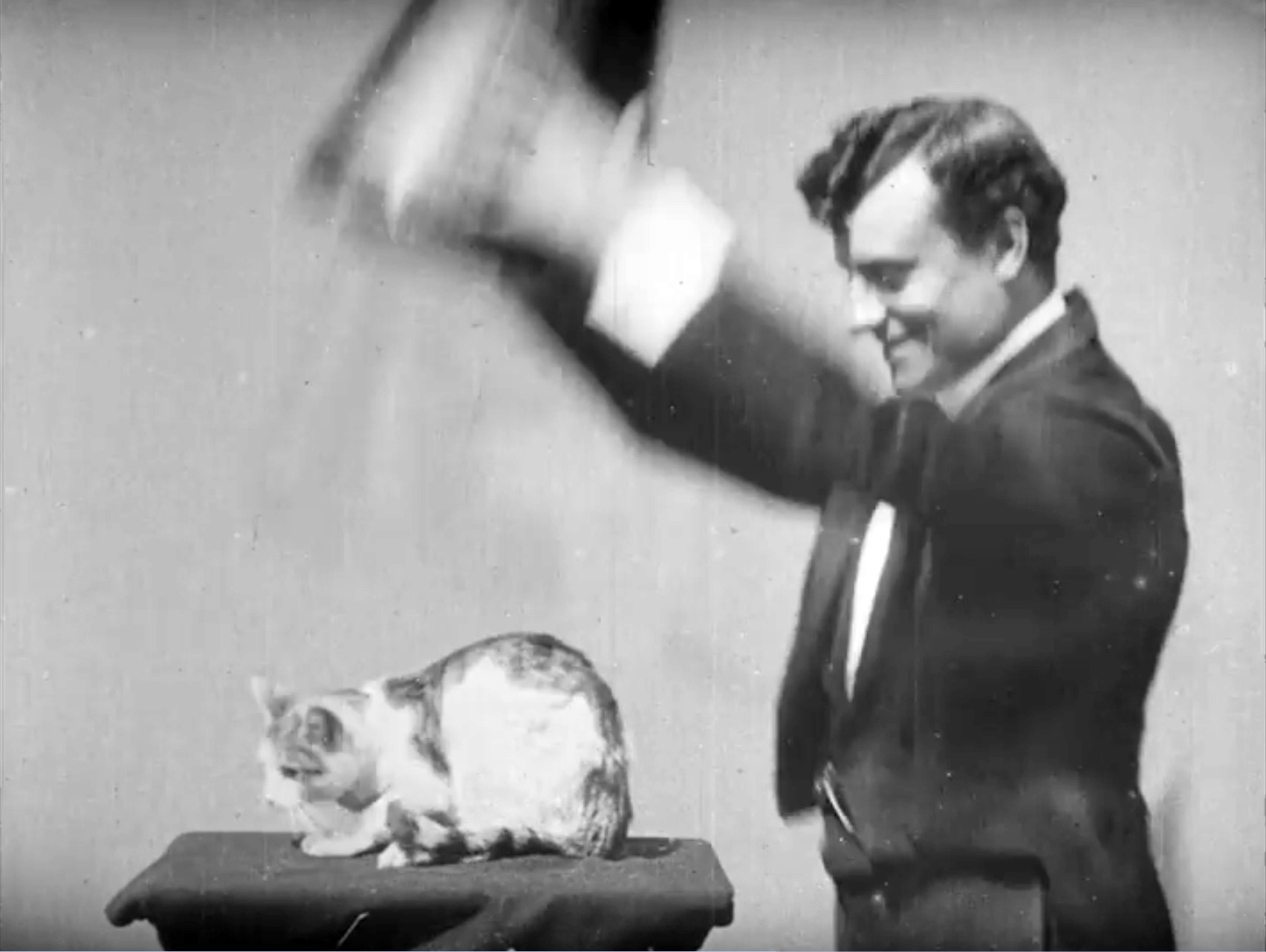  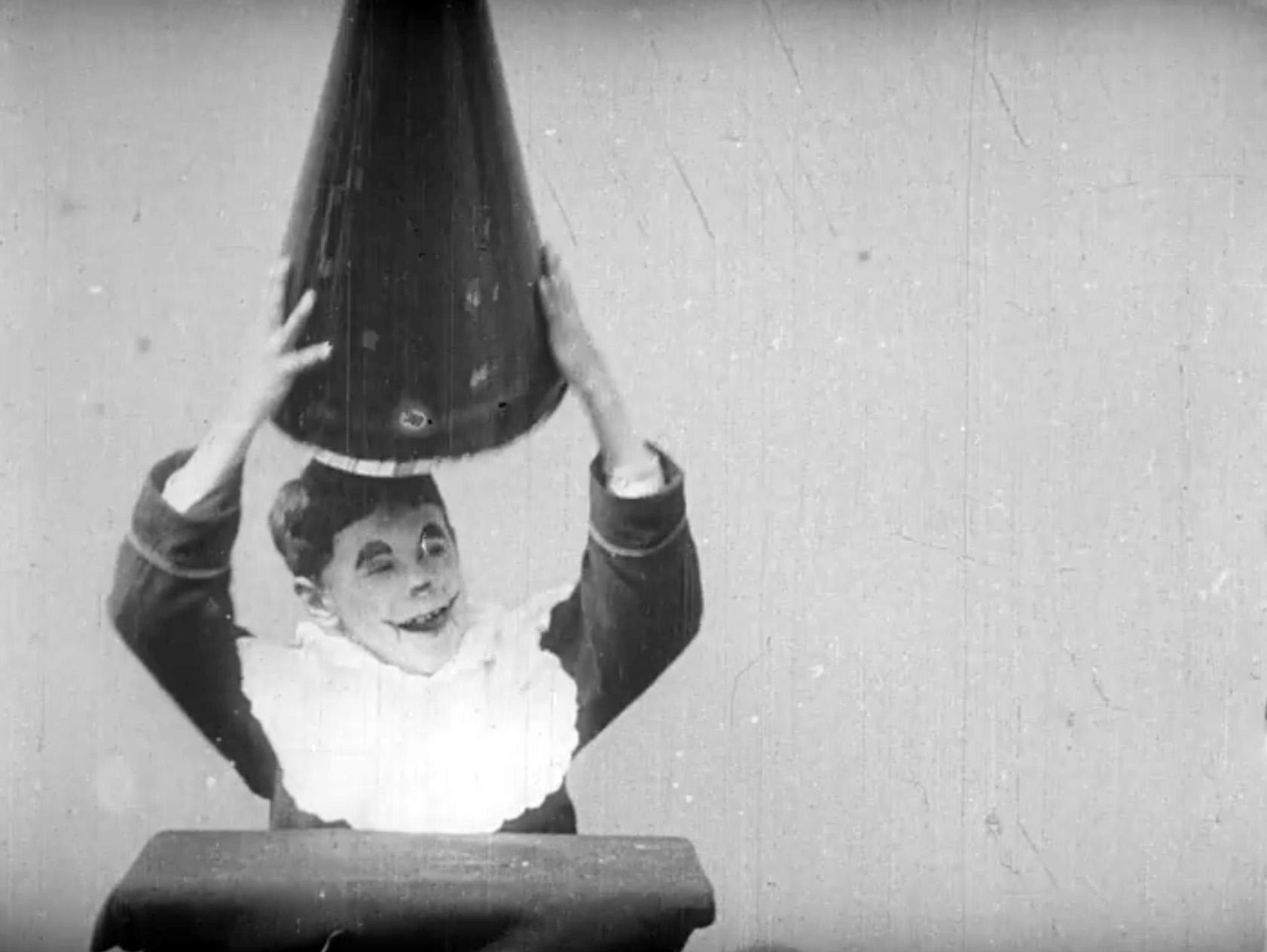
US title The Magic Cone
—Sam Dalton as a conjurer who places an extinguisher over a dog, which changes into a cat, then over some kittens that turn into eggs, then into chicks. He places the extinguisher over his head and turns into a boy.(October, 110ft.) Released in the US by Kleine, November 1905.
View online (BFI Player). View online (YouTube).
Marvellous Capillary Elixir
—Uncertain: possibly the same as the following.
The Marvellous Hair Restorer
Alt title Magic Hair Restorer
—Features Sam Dalton. Hair grows on the head of bald man and on the tablke, where she spashes the restorer. (October, 105ft.) Released in the US by Kleine, November 1905.
Over the Garden Wall
—Comedy. (65ft.) Released in the US by Biograph and Kleine, 21 November 1903.
The Puzzled Bather and His Animated Clothes
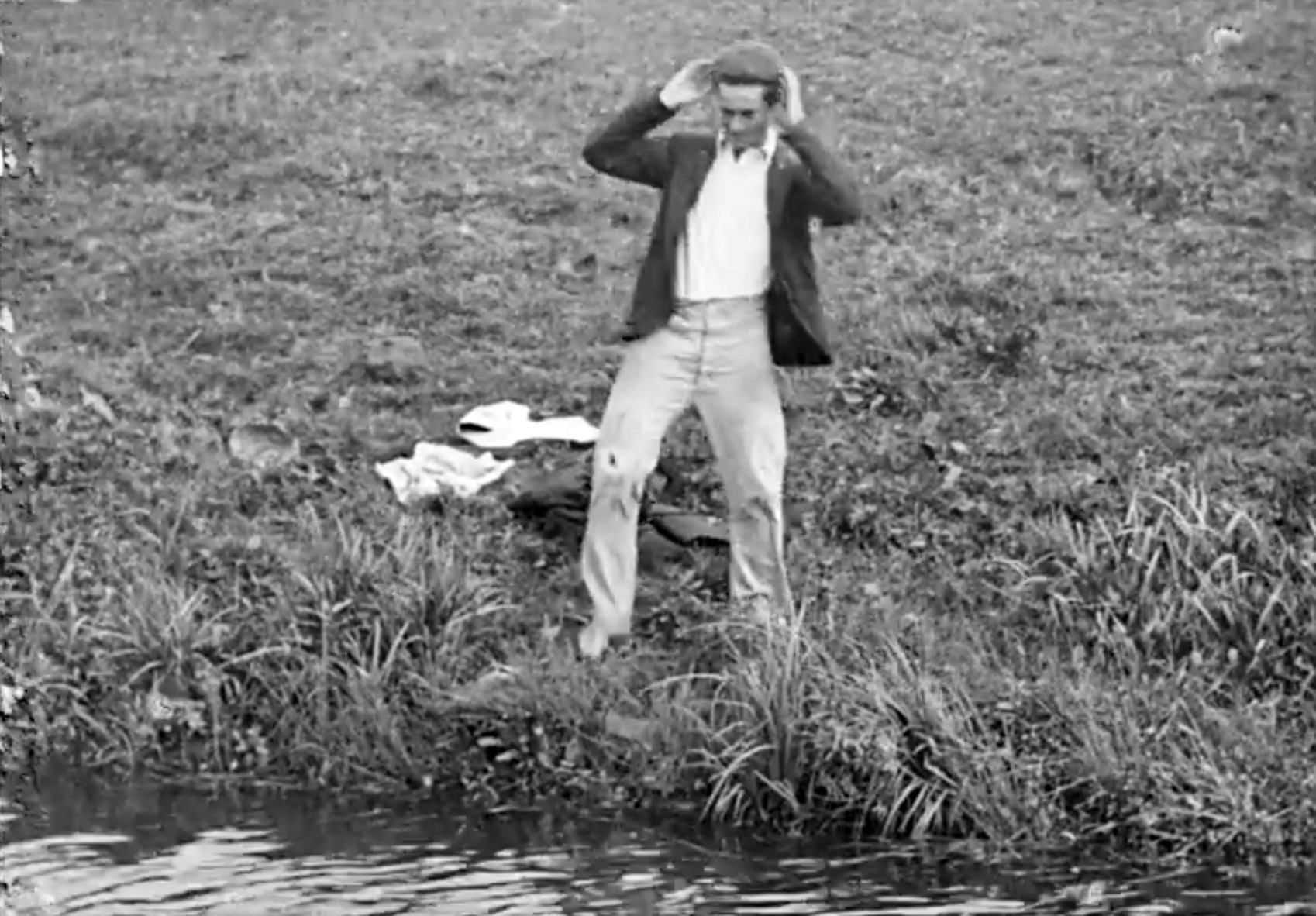
Alt titles The Puzzled Bather, The Bather
—‘A man on a river bank removes his jacket and cap, intending to take a swim, but as each item of clothing is removed it is immediately replaced by another. Exasperated, he dives in fully clothed, and pops out again wearing his bathing suit. However, the clothes he has left in the water follow him out one by one and he finds himself fully dressed again. He walks away resignedly, followed by the clothing he has left on the bank.’(National Film Archive catalogue description.) (October, 80ft.) Released in the US by Kleine and Biograph, 28 November 1903.
View online (BFI Player).
Scenes on the Beach at Brighton
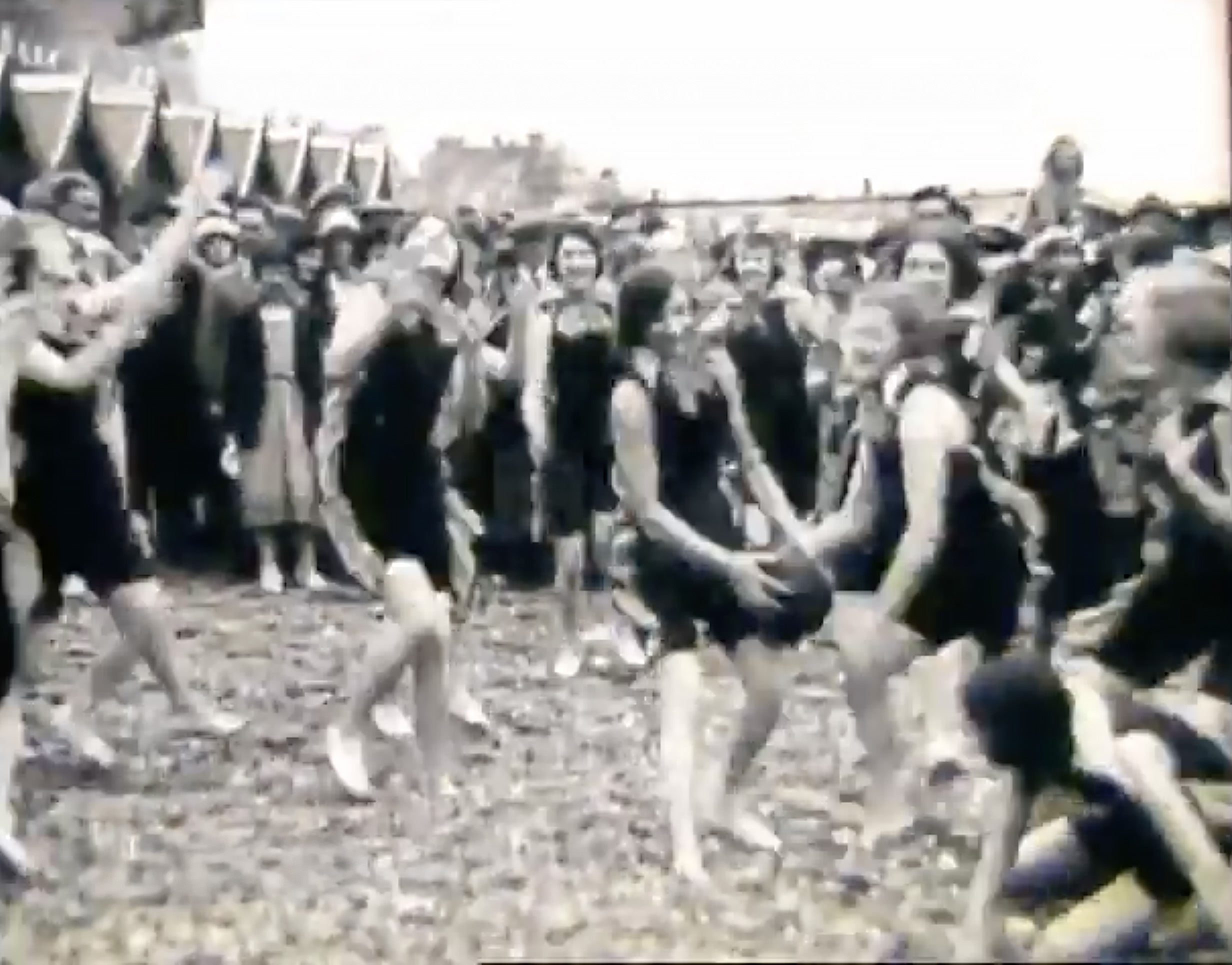  
 
—Filmed opposite Oriental Place. Girls playing handball, then running around bathing huts; people in the water as a rowing boat passes, splashing around, a view up the beach towards Bedford Square and small boats with Jim Hattons, swimming instructor supervising. (1 min 57 secs.)
View online.
Stop Thief! †*
  
—A three-shot chase—perhaps the first ever made—anticipating the Keystone Kops. Sam Dalton is a tramp who steals meat from the tray of a passing butcher's boy. The tramp hides in a barrel as dogs gather round and the butcher’s boy pulls him out. The second shot includes a deliberate jump-cut to speed up action, of the kind not normally practised until the French New Wave cinema of the late 1950s.(October, 115ft.) Released in the US by Biograph and Kleine, 28 November 1903. [0067]
View online (BFI Player) and View online (YouTube).
Teasing Grandpa
—Another in the 'two naughty boys' series, featuring Williamson's sons Alan and Colin, who stick a dead fly on grandpas's spectacles. (October, 92ft.)
Tomorrow Will be Friday
—Features John Macauley, a 'robust tenor' from the D'Oyly Carte Opera Company, who was appearing in the opening programme at the newly-opened Hippodrome on 26 August-21 September 1901. (September/October, 95ft.)
¶ James Williamson away from Brighton
Queen Victoria's Funeral series
—The Alberta Leaving the Trinity Pier (60ft), Funeral of Her Late Majesty (100ft), The London Procession (170ft). This was the first news event to be seen around the world. (2 February)
• 1902
¶ Laura Bayley for GAS Films
The Donkey and the Serpentine Dancer
—A donkey and a costermonger perform a dance. (May, 75ft.)
The Monk in the Studio
Alt title The Monk in the Art Studio
—features D Philippe. (100ft.)
The Monk's Macaroni Feast
—Features D Philippe, who eats pasta and then the film reverses. (July, 125ft.)
Mother Goose Nursery Rhymes
—Eight separate semi-animated scenes and live action illustrating nursery rhymes, probably re-enacted from a pantomime, featuring Tom Green and made with a Biokam 17.5 camera.(November, 550ft or 600ft.) Released in the US by Edison Manufacturing Company February 1903.
Goosey Gander.
Hey, Diddle Diddle, The Cat and the Fiddle. †
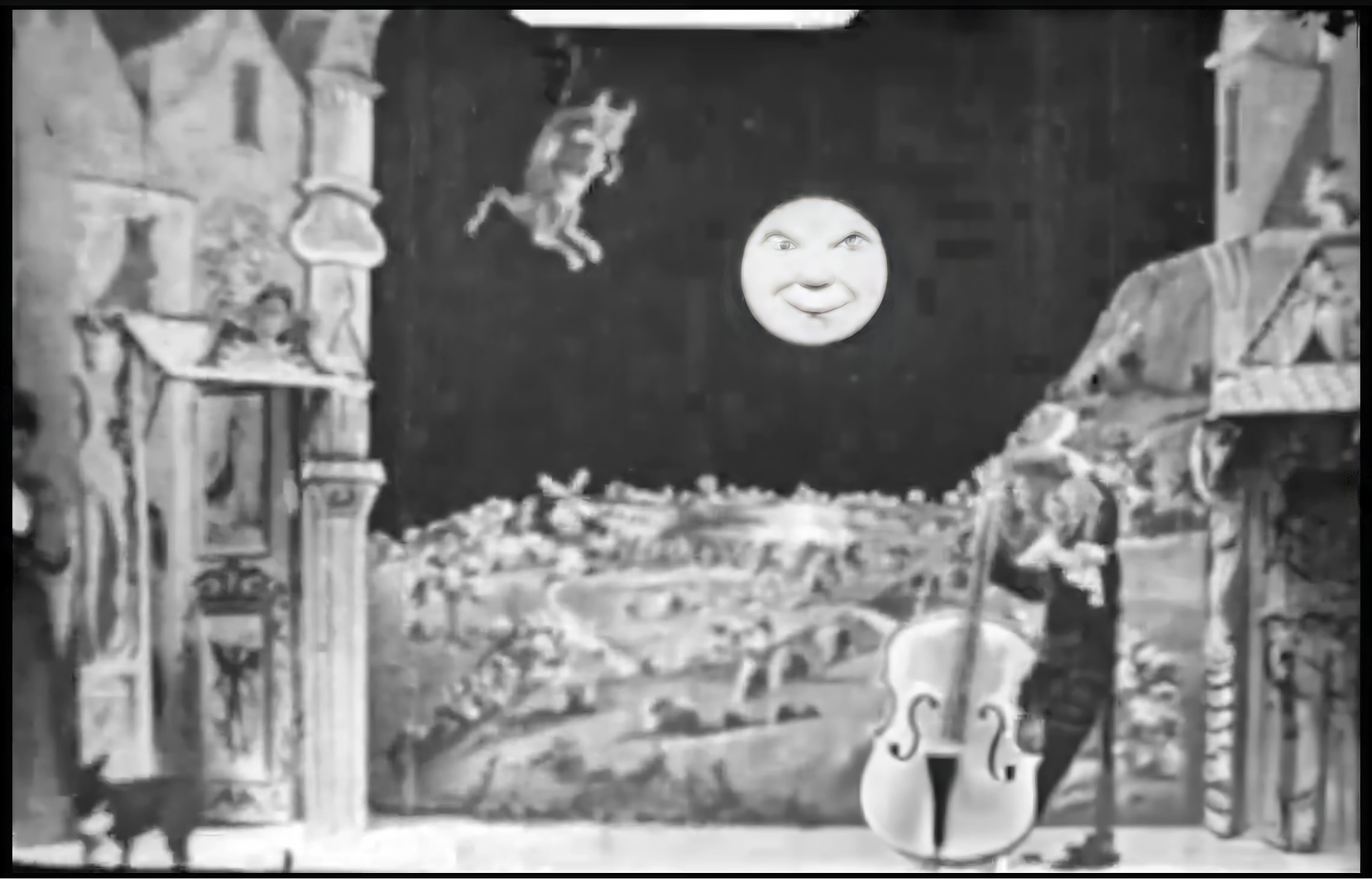
—(57 secs.)
View online.
Jack and Jill.
Little Miss Muffet.
Old King Cole and Blackbird Pie. †
Old Mother Hubbard. †
Old Woman in a Shoe.
Sing a Song of Sixpence
Pa's Comments on the Morning News †
How Pa Reads the Morning Paper
—A ‘facial’, showing Pa reading the paper, thumping the table and breaking his boiled egg, which smells bad. (July, 75ft.) Released in the US by American Mutoscope and Biograph Company, April 1903. Also released in a 17.5mm Biokam version with the title How Pa Reads the Morning Paper.
Tommy Atkins and his Harriet on a Bank Holiday
—A costermonger couple dance together. (May, 50ft.)
¶ G A Smith for GAS Films
Some of these appear to be re-releases of earlier films, possibly in 17.5mm Biokam versions.
After Dark, or The Policeman and His Lantern
US titles Life of a London Policeman and Life of a London Bobby
—Features Tom Green. 'This is a mixture of fun and pathos. When the picture first bursts into view, the exterior of an English Police Station is seen, from which the squad emerges. A change and then one of the "finest" is seen posing before a great building as though proud of his uniform. Again a change and we see a table on which was placed a dark lantern. Bobby's hand reaches forth and grasps the lantern and we follow him through the famous "White Chapel" district of which we have heard so much. All that is seen are the rays of light from the lantern and the object at which they are pointed. We see a high board fence on which a number of advertisements appear and the rays move along until "Bobby's" best girl is seen on the top of the steps leading into the basement of the house where she is employed. In her hand she holds dainty viands, which she knows Bobby delights in, and she beckons to him to follow. In this case you can draw your own conclusions. We follow the light through all the dark passages of the district until it enters a bank building and surprises a burglar at work on a safe. Suddenly Bobby appears behind the lantern, a scuffle ensues and the burglar is captured. This is undoubtedly one of the most novel moving pictures ever made.' [Lubin catalogue synopsis] (November, 200ft or 225ft.) Released in the US by S Lubin 18 July 1903.
The Amazons' March and Evolutions
Alt title The March of the Amazons
—The dance troupe from the pantomime Robinson Crusie. (December, 75ft.)
At Last! That Awful Tooth
Alt title Oh! That Awful Tooth
—(50ft.)
Baby in a Pram
—Uncertain.
The Cakewalk
—Features The Melrose Trio (includes Mat and Lalla Melrose), music hall artistes who were appearing at the Hippodrome in the week of 7-12 July 1902; the cakewalk dance was part of their act. (January, 75ft.) Released in the US by Kleine, November 1905.
The Comedian and the Flypaper
US title The Absent Minded Clerk, Fly Paper and Silk Hat
—Features Mat Melrose, a member of the music hall trio (see The Cakewalk. above); ‘The absent-minded clerk is about to leave the office on an errand. He reaches for his silk hat, which he had thoughtlessly placed on a piece of fly-paper lying on the table. As he is about to place the hat on his head, he finds it sticks to his hand. He then places the paper on the floor and tries to free himself from it by stepping upon it, but it sticks fast to his shoes. He then pulls it from his shoe, and it sticks fast to the other hand. An idea then seizes him and he places it upon the table and sits on it. Pulling it from his hand, he leaves the room in apparent satisfaction, but to the great laughter of the audience, the fly-paper is hanging to his coat tails’ [Edison catalogue]. (75ft.) Released in the US by Edison Manufacturing Company May 1902.
Episodes in the Life of a Lodger
Alt title An Episode in the Life of a Lodger
—Comedy. (July, 110ft.)
Hilarity of Board Ship
—A scene from the Robinson Crusoe pantomime of Mother Hubbard dancing a hoedown and mutineers a hornpipe. (December, 125ft.)
His First Cigar, Probably His Last
Alt titles A Bad Cigar, That Awful Cigar
—(100ft.)
—Possibly the same as A Bad Cigar (1900), re-issued in a Biokam 17.5mm version.
The March of the Amazons
—(75ft.)
The Monk in the Monastery Wine Cellar
—Features D Philippe as a monk who gets drunk. (January, 50ft.) Released in the US by American Mutoscope and Biograph Company April 1903.
The Monk's Ruse for Lunch
—Features D Philippe. (100ft.)
Old Lady Tries to Thread Her Needle † 45ft.
—Possibly the version of Grandma Threading Her Needle (1900) released in the US by Edison, September 1902. A 45ft copy with this title dated 1902 is in the National Film Archive.
Oh That Collar Button!
Alt title The Irishman and His Button>
—A man struggles with his collar. (January, 50ft.)
Pantomime Girls Having a Lark
—A comedian and ballerinas get off a yacht in the pantomime Robinson Crusie. Possibly made to show during a stage performance. (December, 50ft.)
Policeman and Burglar †
—A policeman finds a burglar at work, they fight and the policeman makes an arrest. Probably a 17.5mm Biokam release of the last scene of After Dark [qv above] (46ft).
The Puritan Maiden's Upside-Down Dance
—Biokam version re-release of the 1900 film Topsy-Turvy Dance by Three Quaker Maidens [qv].
Robinson Crusoe †
Tambourine Dancing Quartet
— High-kicking dance by four girls. (June, 135ft.)
Tommy and the Mouse in the Art School
lt title Little Willie and the Mouse
—A boy releases a pouse and frightens a model. (50ft.)
Too Much of a Good Thing
—A nurse brings triplets toa new father, who runs away.(January, 50ft.)
The Two Old Sports at the Music Hall
—Two men watch a dancing girl and a tenor from the box. The latest in the series featuring Tom Green and J D Hunter. (January, 75ft.)
¶ G A Smith for Warwick Trading Company away from BRighton
Ascent of a Crystal Palace Balloon
—(75ft.)
Ping-Pong Contest at Crystal Palace
—(50ft.)
Various Stages of Balloon Inflation
—(120ft.)
¶ Georges Méliès and G A Smith, co-directed for Warwick Trading Company and Star Films
 
Coronation of Their Majesties King Edward VII and Queen Alexandria [sic] (alt title Le Sacré d'Edouard) (June)
The big news event of 1902—apart from the end of the Boer War—was Edward VII’s coronation, the first such ceremonial since Queen Victoria’s in 1838 and the first since the advent of the cinematograph. The Mutoscope and Biograph company had secured the rights to film the actual event, So Charles Urban of Warwick Trading Company commissioned a version of the ceremony to be co-directed by George Albert Smith and Georges Méliès and made with actors in advance at Méliès' Star Films studio in Montreil, Paris.
The idea was to have the film ready for release at the time of the event on 26 June. However, the king fell ill and the coronation was postponed until 9 August. This still shows that the lavish production of The Coronation of Their Majesties King Edward VII and Queen Alexandria [sic] (alt title Le Sacré d’Edouard) would probably have outshone its actuality rivals, hinting at the enhanced production values that were to come. Already a film could cost $10,000 to produce (equivalent to £430,000 today), as the press advertising for the US release of the film announces. (Jne, 4 mins.)
View online.
¶ James Williamson for Williamson & Co/Williamson Kinematograph Company
• This year Williamson builds his glasshouse studio at Cambridge Grove
The Acrobatic Tramps
—Trick comedy featuring John and Charles Cobbold (a possible precursor of Chaplin?), as tramps who are chased by an old carpenter. (August, 104ft.) Released in the US June 1908.
An Amateur Bill Sykes
—Comedy about a burglar, who approaches the camera and removes his beard. (December, 88ft.)
Burlesque of Popular Composers
—Popular music hall act featuring Ford and Hanson, ‘the American musical millionaires’. (May, 150ft.)
Captain Clives and his Clever Dog Tiger
—Features Captain Clives (real name Alfred Holmes), 'the World's Only Dog Equilibrist'. (August, 175ft.)
Close Quarters, with a Notion of the Motion of the Ocean
Alt title Down Below
—Comedy. A couple try to get dressed in the cabin of a rolling ship. (July/August, 115ft.) Released in the US by Biograph and Kleine, 21 November 1903.
A Day in Camp with the Volunteers
—Observational comedy in seven scenes. Reveille
and morning activities in a military camp. (July/August, 200ft.)
An Extra Turn
Alt title The Extrey Turn
—Comedy. The audience trhows fruit as a music hall performer. (July, 70ft.)
Fighting His Battles Over Again
—A Chelsea pensioner joins a group of young soldiers in conversation, showing how he would have used a fixed bayonet but the effort reminds him of his age. He is heartily cheered by his audience. (145ft.)
A Lady's First Lesson on the Bicycle
—Features Nellie Wallace and John Cobbold. Nellie Wallace (1870-1948) was one of the enduring stars of music hall. She appeared at the Palace Pier theatre and at the Hippodrome and was at the Empire in the week of 21 April 1902. (July, 75ft.)
The Little Match Seller †
  
Alt title The Little Match Girl
—This is one of the earliest film adaptations from a literary source, the story by Hans Christian Andersen. In a snowy street, a girl seeks help from a passing gentleman, is attacked with a snowball by a boy, is ignored by the lamplighter. She strikes a match on the wall and the light of the match causes the wall to be transparent and the room behind to become visible. She strikes a second, third and fourth match, then expires. An angel lifts the girl's spirit to heaven. A policeman finds her body. Williamson shows considerable skill in aligning the double exposures, especially of the plate of food, which appears to move into the girl’s hands (the figure of a child moving the plate can be detected faintly in some frames), and the policeman's lantern beam is also superimposed. The continuing fall of snow is impressive. This may be the first time a ghostly spirit is seen on film leaving a more corporeal dead body in the final double exposure of the girl being carried aloft by an angel. The girl and boy are probably Lilian and Tom Williamson. (December, 210ft.) Released in the US by Edison, 21 March 1903.
View online.
Ping-Pong
US title The Hodcarriers' Ping Pong
—‘Two hodcarriers are seated upon a large lime barrel eating their lunch. Having finished their lunches and lighted their pipes, they propose a game of ping pong. An old door is laid across the barrel, and a piece of joist laid crosswise on the door to take the place of a net. A rubber ball is produced and the sons of Erin each produce a trowel, and the game begins. As is almost always the case when Paddy and Mike engage in sport, a dispute ensues. Mike endeavors to explain the rules of the game to Paddy, but Paddy won't have it, and biff; the fight begins. Paddy and Mike fall into the mortar, and when the fight is stopped by the arrival of the boss, they are simply “sights”. ’ (Catalogue entry.) (May, 90ft.) Released in the US by Edison, September 1902.
Plumpton Steeplechase
—At the racecourse north of Brighton. 2 parts totalling 220ft.
Professor Reddish Performs his Celebrated Bicycle Dive †

Alt title Flying the Foam
—a trick cyclist, 'Professor' Reddish, rides down a ramp and dives off the West Pier on his bicycle, seen also in reverse [right]. (80ft) According to the BFI's screenonline, a longer version of the film with the title Flying the Foam and Some Fancy Diving was issued in 1906. However, as the difference in length is 40ft (ie, only four seconds), that may be accounted for simply by the addition of a title.
A Reservist Before the War and After the War †

—Social realism, with intertitling. A man at home with his family receives his call-up. On his return he finds the home bare and steals bread from a baker’s cart. A policeman follows him home, discovers his circumstances and takes pity. (December, 290ft.)
Sambo
—features Sam Dalton in blackface, smoking a cigar. (August, 80ft.) Released in the US by Kleine, November 1905.
The Soldier's Return †

—Social realism: ‘A soldier, returning from the [Boer] war, finds his humble cottage empty and desolate. Neighbors and friends crowd around him and inform him that his aged mother has gone to the poor house. He immediately hastens thither and a touching scene occurs at their meeting. The mother's departure from the institution leaning on her stalwart son's arm, and her farewell to the old women inmates, is affectionate in the extreme. Home again, the mother sits contented in the doorway while her soldier boy works busily in the little garden. A beautiful story told in a man ner that appeals directly to the heart.’ (Edison catalogue). ‘This is a complete story without words and we do not hesitate in saying that no matter where it is shown, it will appeal to old and young alike and will move any audience to tears. No expense has been spared to make this film perfect in every respect.’ (Lubin catalogue). Partly filmed at the Brighton Workhouse in Elm Grove (now Brighton General Hospital). (June, 185ft.) Released in the US by Biograph, Edison, Kleine, Lubin and Vitagraph, January 1903.
Those Troublesome Boys
—Features Williamson’s sons Alan and Colin in a continuation of the ‘two naughty boys’ series that started in 1898. ‘A workingman is busy mixing cement in a door yard. Two small boys are watching the proceedings interestedly but are driven away by the workingman. They decide to get even with him and during an interim, while he is called away, they arrange a bucket of mortar on the end of a plank in such a manner that when the workingman returns and com mences to pound the foundation of the walk he strikes the end of the plank and the pail of mortar flies in the air and the contents completely covers him much to the glee of the two youngsters.’ (Biograph catalogue) (July, 102ft.) Released in the US by Biograph and Kleine, February 1904.
A Workman's Paradise
—Extensive use of reversed film. ‘Scene, a building in course of construction. Hodcarrier arrives, and placing the hod in an upright position, he turns his attention to a load of bricks nearby. Wishing to fill the hod and being too lazy to stoop for bricks, he commands them to come to him. Suddenly the bricks are seen to rise from the ground and jump into his hands. One by one they are placed in the hod, until it is filled. His commands thus far having been obeyed, he tries it again on the hod. Walking away from it, he beckons it to follow him, and instantly it begins to move. Scene now changes to the scaffold. The hodcarrier jumps to it from the ground, and is followed by the hod and bricks. After emptying the hod, he goes for mortar and this is secured in the same way as the bricks. After putting the mortar on the board used for holding it, the hodcarrier leaves the scene. Upon seeing the success met by the hodcarrier, the bricklayer, who has been working on the scaffold, tries his hand with the magical bricks and mortar. He commands them to come to him. They rise from where they were placed by the hodcarrier, and adjust themselves in place on the building. A very amusing subject and sure to cause a laugh.’ (Edison catalogue) (June, 170ft.) Released in the US by Edison, Kleine and Vitagraph, 21 March 1903.
¶ James Williamson away from Brighton
Coronation Procession series
—Close View of State Coach (20ft), Dress Carriages (50ft), The King's Procession (100ft), Prince of Wales's Procession (45ft), The State Coach (120ft), The State Coach at the Canadian Arch (40ft), Trumpeters Royal Horse Guards (45ft). Filmed on the postponed date of 9 August (see box above).
Coronation Through London on Wednesday June 25
—This must have been a rehearsal as the coronation, scheduled for 26 June, was postponed on 24 June because the king required an emergency appendectomy. The coronation took place on 9 August. Nine parts totalling 346ft.
The Imperial Troupe of Russian Dancers.
—Three ladies, two men and two boys perform a national dance. (September, 487ft.)
Magnificent Panorama of the Fleet
Naval Review
—(125ft.)
Opening of Parliament Procession.
Panorama on the Belfast and North of Ireland Railway.
—(250ft.)
Scotland series
—Circular Panorama of Edinburgh (60ft), Circular Panorama of the Forth Bridge (65ft), Panorama of Princes Street, Edinburgh (90ft), Ride on the Glasgow Trams (130ft), Scenes on the Clyde (75ft).
• 1903
¶ Hepworth Manufacturing Company
At Brighton Beach
—‘This is a very humorous series of views at England's great popular seaside resort and is full of laughable incidents. The fakirs are shown at work and various seaside amusements depicted, among them a group of costerwomen and children wading. The whole scene is excellent throughout, very sharp and clear photographically.’ (Biograph catalogue) (100ft/) Released in the US by Kleine and Biograph, September 1903.
¶ G A Smith for GAS Films
Distributed in the UK by Urban Trading Company.
Smith now substantially reduces his production activity to concentrate on developing colour cinematography.
The Baby and the Ape
US title The Baby, the Monkey and the Milk Bottle
—An excaed monkey drinks from a baby's bottle. (November, 150ft.) Released in the US by Georges Méliès January 1904.
Dorothy's Dream
Alt title A Dream of Fairyland.
—features Eva Bayley. Dorothy (presaging The Wizard of Oz?) dreams of being a series of characters: Aladdin, Bluebeard, Cinderella, Dick Whittington. (570ft, 573ft or 600ft) Released in the US by Kleine Optical Company/Edison Manufacturing Company July 1904.
The Free Trade Bench
—An early political film. Smith was apparently a supporter of the more protectionist 'fair trade' proposition of Joseph Chamberlain, the Secretary of State for the Colonies. 'The large and small loaf of Mr Chamberlain's opponents.' (November, 50ft.)
John Bull's Hearth
 
Alt title John Bull's Fireside.
—A rare piece of political polemic, concerning a debate then under way between advocates of free trade and those, led by Joseph Chamberlain MP, who argued for fair trade. The Optical Lantern and Cinematographic Journal described it thus: A 'Frenchman and German, Russian and American ... enter singly, and, seeing the words "Free Trade" over the mantlepiece, seat themselves comfortably round John's fire, leaving him standing room only. While in this position a Colonial arrives, and with the help of John, turns out the foreigners.' The Colonial shows the audience a picture of Joseph Chamberlain and replaces the 'Free Trade' sign with one proclaimsing 'Fair Trade'. Released by Urban Trading Company. Two versions exist with variations in costumes, a scroll rather than a sign and three colonials rather than one. (November, 185ft.)
The Little Witness

—Uncertain.
Mary Jane's Mishap, or Don't Fool with the Paraffin †*


—The film consists of 14 shots. In the opening sequence of Mary Jane (Laura Bayley) entering the kitchen, building the fire in the range and blacking the boots, Smith used the innovation of cutting from the wider establishing shot to closer shots to direct the audience’s attention. In particular, he uses close-ups of Laura Bayley as Mary Jane playing to the camera when she admires her smudged face in a mirror and of her pouring paraffin on the fire in which she winks at the camera. This is an unusual and significant breaking of the ‘fourth-wall’ convention, drawing the audience into complicity with her actions. When the fire explodes and blows Mary Jane up the chimney, Smith uses a jump cut just as the cloud of smoke expands to take Mary Jane out of shot. She next appears (in life-size dummy form) emerging from the chimney and descending in pieces. The close-up of her tombstone, effectively an intertitle—complete with ‘Rest in Pieces’ joke—gives way to a graveyard scene through a vertical soft-edge wipe—both pioneering aspects of film grammar. Finally, the women who visit the grave are scared away by Mary Jane’s superimposed ghost. She reaches down the paraffin can and returns to the earth as her cat stands by the grave. (250ft.) A substantially extended reworking of Biograph’s How Brigit Made the Fire (1900) and a two-shot Edison film, The Finish of Bridget McKeen (1901), this shows the level of sophistication to which Smith’s filmmaking has aspired. (February, 250ft.) Released in the US by Biograph, Kleine, Edison and S Lubin, April 1903.
View online.
The Sick Kitten †*

—A remake of his 1901 film The Little Doctors. The girl holds the kitten as a second cat looks in. The boy in a top hat enters as the doctor, goes to fetch a jar of fish juice, which the girl spoons into the kitten's mouth in close-up. The boy and girl shake hands, he raises his hat to the camera and exits. (1 min.)
View online.
¶ G A Smith away from Brighton for Charles Urban Trading Company
The Girl on the Ball
—Newsreel footage of Mlle Florence, an American music hall artiste, as she approaches Brighton on a walk in six days from London to Brighton balancing on a large rubber ball, approximately two feet in diameter. The film is shown the same night at the Alhambra and Hippodrome. (27 June). Released in the US by Biograph, September 1903 and by Kleine in 1905.
¶ James Williamson for Williamson Kinematograph Company
The Dear Boys Home for the Holidays †

Alt title Boys Will be Boys.
—Two boys are welcomed home by their mother but then get up to pranks. Williamson appears as the father, his sons Tom and Stuart play the boys, who mess around, paint a moustache and beard on the baby's face. Their father catches them and when they come back into the room they remove cardboard from their trousers. (December, 290ft.) Released in the US by Edison, 25 April 1904. Re-released by Williamson & Co, 8 February 1908.
View online.
The Deserter
—Melodrama in eight scenes in which a soldier must desert to attend his father's deathbed. (October, 520ft.) Released in the US by Edison, Biograph and Kleine, 21 November 1903.
The Evil-doer's Sad End
—Trick film. (November, 125ft.) Released in the US by Edison, 25 April 1904.
Juggins' Motor
—Comedy. 'Why he now offers it for sale cheap.' (December, 125ft.)
No Bathing Allowed
—Comedy, featuring Charles Cobbold. A man, missing a sign, goes swimming in the river. When warned by passing rowers he climbs out but as he is drying himself his fiancée and her mother approach. They stop to inspect a statue. The swimmer in panic drapes himself in a towel and poses on a vacant pedestal. His fiancée prods him with her umbrella and he is discovered. (August, 140ft) Released in the US by Edison, 25 April 1904.
Quarrelsome Neighbours
—Comedy. (June, 125ft.) Released in the US by Biograph, Edison and Kleine, 21 November 1903.
Remorse: A tragedy in five acts
—features D Philippe in a five-scene version of his own play. (June, 450 ft.) Released in the US by Williamson & Co, 14 March 1908.
Spring Cleaning
—Five scenes. ‘One of the greatest comedy films ever taken; illustrative of a topical event and thoroughly up to date. It consists of a series of humorous catastrophes following each other in such rapid succession that at the finish of the subject the audience is left convulsed with laughter. Like the celebrated character of Mrs Macstinger, in Dickens' Dombey & Son, the lady of the house is evidently in the throes of spring cleaning. Her husband wanders disconsolately from room to room, trying to find one spare corner, where he can write a letter in peace. His adventures with the domestics, painters, paperhangers, chimney sweep and other assistants inthe art of housecleaning, while looking for a secluded spot, constitute the whole story. The subject is clear throughout, photographically perfect, and the humor is such, that we can safely predict it will be a winner wherever shown.’ (Edison catalogue). Williamson appears as the father. (May, 210ft.) Released in the US by Biograph, Edison and Kleine, 16 May 1903.
A Trip to Southend or Blackpool
—Comedy. The discomfort of an overcrowded railway carriage. (July, 163ft.) Released in the US by Biograph and Kleine, 21 November 1903.
Wait Till Jack Comes Home
—A builder, who has broken his leg, is saved from eviction by the return of his sailor son. Drama in seven scenes. (September, 430ft.) Released in the US by Biograph and Kleine, 28 November 1903. Re-released as When Our Sailor Son Comes Home (465ft) by Williamson & Co on 21 March 1908.
The Workman's Paradise.
—Trick film of bricks and mortar laying themselves. (170ft.)
The Wrong Chimney
—Mistakenly, men put water and salt down a neighbour's chimney. (August, 150ft.)
The Wrong Poison
—A ‘facial’ about the a suicide who drinks from a bottle labelled poison but finds is is gin, so gets drunk instead. (July, 160ft.) Released in the US by Edison and Kleine, 25 April 1904.
¶ Benjamin Jumeaux and W Lascelles Davidson
The Rival Clothiers †
—The first trichrome test film, made on an 82mm strip with three images side by side to be merged by projecting through red, green and blue filters, shot in Brighton or Southwick.
View online.
• 1904
¶ Alf Collins for Société des Etablissements L Gaumont
A Day at Brighton
US title At Brighton
—‘A Coster family are eating their luncheon on the sand [sic], and are interrupted by various peddlers, until finally they begin to get into a quarrel with the Hokey-Pokey man who is attacked by the entire crowd and his wares scattered over the beach. The family then decide to go for a sail; they are first shown embarking on a small fishing schooner, then after ward at sea pitching and tossing in a heavy swell. This scene is particularly effective and very amusing, because the entire family are seasick, and to all appearance their seasickness is genuine. The finish of the picture shows their arrival on shore where they are carried out of the boat, most of them in a state of collapse.’ [Biograph catalogue] (October, 250ft.) Released in the US by Kleine and Biograph, December 1904.
Lovers on the Sands
Alt title A Stroll on the Sands
—Boys make a hole in the beach at Brightonto trap a young couple. (October, 986ft.)
Mixed Bathing
—On the beach at Brighton, a fat husband flirts with girls swimming. (October, 250ft.)
On Brighton Pier
—'The rendezvous of the greatest comedians in the world'. (October, 180ft.)
¶ G A Smith for GAS Films away from BRighton
Distributed by Charles Urban Trading Company
Holiday Makers Dancing on Crystal Palace Terrace
—(50ft.)
International Cycling Races at Crystal Palace
—(225ft.)
Motor Climbing Contest at Crystal Palace
—(125ft.)
Phillips' New Flying Machine
—(100ft.)
Repulsing an Attack by Artillery and Cycle Maxim Corps
—(175ft.)
Sir Hiram Maxim's Captive Flying Machines

—A fairground roundabout at Crystal Palace of suspended flying machines. (75ft.)
View online.
• Smith now ceases regular film production to concentrate on development of colour cinematography, for which he shoots experiments
Fireworks Display at Crystal Palace †
Great Display of Brock's Fireworks at the Crystal Palace. (125ft.)

—(275ft.)
View online.
¶ James Williamson for Williamson Kinematograph Company
An Affair of Honour
—‘Two Frenchmen quarrel over a newspaper in a café and exchange cards. They meet in the morning and several shots are exchanged, but they are uninjured. Not so the poor doctor and seconds;they are either dead or wounded. Then the combatants, fearing doubtless they may get injured, decide that honour is satisfied and leave the field good friends.’ [Butcher’s catalogue, also released by Urban Trading Company.] (December, 210ft.) Released in the US by Williamson & Co and Edison, August 1905.
All's Well that Ends Well
—Comedy, distributed by Urban Trading Company. (October)
The Clown's Telegram
—A pathetic drama of a clown despairing over the death of a distant daughter. (August, 255ft.)
Gabriel Grub the Surly Sexton
US title Gabriel Grub
—A sexton reforms after dreaming of being abducted by goblins. From a story by Charles Dickens and based on a set of lantern slides, distributed by Urban Trading Company. (November, 445ft, 8 mins.) Released in the US by Williamson & Co, 8 February 1908. A version of the optical lantern show is available on a BFI DVD.
The Great Sea Serpent

—Comedy. ‘Mr MacDoodle, in true nautical attire, goes for a tripon a steamer and is “had” by his friends with the aid of a centipede and his telescope, when the harmless inset becomes a monster of the deep.’ (Butcher’s catalogue). (July, 135ft.) Released in the US by Edison, December 1904.
An Interesting Story †*
  
—Comedy in six scenes. A man has his nose in a book. He pours coffee into his hat rather than his cup. He trips over thewoman cleaning his front step and wanders off down the road, surviving various mishaps. Partly filmed in the Williamson studio grounds: two girls skip in front of Rose Cottage, the family home, between the glasshouse studio and terraced houses at the rear of Cambridge Grove (then Cambridge Stables). He meets a donkey at the end of Cambridge Grove. In the final sequence, which appears to have beenfilmed in the vicinity of Southlands Hospital at Southwick, he is flattened by a steamroller but revived by two passing cyclists who use their pumps to reinflate him. The absentminded reader walks off in a manner reminiscent of the Chaplin walk of a decade later. [A similar character, Dr Greenbow, appears in Alfred Hitchcock's black comedy The Trouble with Harry but without the steamroller.] (October, 235ft.) Charles Urban catalogue number 4266 (June 1905); Released in the US by Edison, December 1904.
View online.
Oh! What a Surprise!
—Comedy. ‘What mischief makers boys are, ... how two bags of flour become two flower girls, and in what a difficult position they placed a poor man blessed with a jealous wife.’ (Butcher’s catalogue). Features Williamson’s sons Tom and Stuart. (July, 90ft.) Distributed in the US by Edison, December 1904.
The Old Chorister †
—An old man hears distant singing in a park. He remembers singing in the choir in his youth. At the church the vicar calls in fighting choir boys and invites the old man in. As he sings he sees an angel and dies at the altar. Intended to be used with live performance of C H Roberts’ song, The Aged Chorister, following the instructions in Williamson’s catalogue: ‘At the point where the Old Chorister is remembering his younger days, an on-site boy soprano is to sing the opening measures of Handel’s I know that my Redeemer liveth and again during the scene where the choir is singing in the church, an on-site chorus sings a verse of Sir Arthur Sullivan’s Onward Christian Soldiers, breaking off at the point where the old man is stricken.’ How often such forces were assembled is not recorded. (July, released November, 235ft.)
The Stowaway
—Temperance drama in nine scenes, featuring Marie Mayhew. A boy stows away on a ship and on his return home finds his drunken mother reformed. (September, 550ft.)
The Student and the Housemaid
—A student finds the maid trying on his gown and cap. (August, 135ft.)
They Forgot the Gamekeeper
—A tramp changes his clothes with those from a scarecrow and is shot at by the gamekeeper. (July, 65ft.)
The Tramp's Revenge
—‘A tramp is rather roughly handled by a policeman and naturally looks round for a chance of revenge. This chance is soon offered by the policeman leaving his coat and helmet outside a house where he is entertained by the cook. The tramp makes excellent use of these on a country road, where he extracts a tip from a scorching motorist. He then sends the policeman on a fool’s errand on being asked concerning the lost property and feels amply revenged.’ (Butcher’s catalogue). (December, 210ft.)
Two Brave Little Japs
—War melodrama. A nurse takes a wounded father's dispatch to a ship and is saved by sailors when she is caught by Russians. (September, 490ft.)
• 1905
¶ James Williamson for Williamson Kinematograph Company
Brown's Half Holiday
—A henpecked man is forced to do the spring cleaning. Distributed by Urban Trading Company. (July, 400ft.)
An Eclipse of the Moon
US title Moonbeams
—A pageboy peers through the wrong end of a telescope to fool and astronomer. Distributed by Urban Trading Company. (December, 170ft.)
In the Good Old Times
—People throw objects at a man in the stocks. Distributed by Urban Trading Company (November, 55ft.)
Our New Errand Boy †

—Williamson appears as the grocer, his son Tom as the errand boy, who gets up to tricks that culminate in his being chased by a group of adults. The film runs for nearly six minutes and, although there are only 12 shots, the narrative has pace and style. Williamson mixes types of composition: the shop (Hodder’s at 2 Lorna Road—now numbered 99—is filmed square on with people arriving from various angles. The scene of the two boys crossing the railway bridge has the rest of Wilbury Villas in the background and the water cart scene also shows the road stretching beyond. Three scenes make use of the corners of buildings to show people approaching from two angles.(August, 350ft.) Released in the US by Williamson & Co, 14 March 1908. Many scenes in Williamson's films can clearly be located in still identifiable parts of the area where he worked, giving them an added interest.
View online.
The Polite Lunatic
—Chase film. A plumber drops his putty knife, then runs away from a passer-by who tries to hand it back to him. Distributed by Urban Trading Company. (September, 100ft.)
View online.
The Prodigal Son, or Ruined at the Races
— A gambler disowned by his family finds a fortune in gold and returns to save his blind father from begging. Williamson’s longest film to date, in 10 scenes and running for almost 10 minutes. ‘An excellent picture story, well told, in natural scenery, with good racecourse scene.' Distributed by Urban Trading Company. (August, 585ft.)
The Real Sea Serpent Uncertain. The same as The Great Sea Serpent (1904)?
Rival Barbers
—‘Barber No 1 displays a striking advertisement which Barber No 2 adds to, to the detriment of Barber No 1. Some boys and a gent see the joke, but not Barber No 1, who, thinking he has caught the delinquent, hands the gent into his shop, lathers him and kicks him out again to the amusement of Barber No 2, who commiserates with his rival.’ [Butcher’s catalogue] (July, 125ft.) Released in the US by Williamson & Co, 15 February 1908.
Sausages
—‘A loafer is given a job of carrying round the streets a board with the following legend: “Above is what Chopper’s Sausages are made from”, above being a picture of a fine prize pig. But the man soon tires of his job,and is enticed to enter a public house with an acquaintance, leaving his boards outside. On resuming his boards he fails to notice that some bill-posters had changed the pig for a cat. The fame of this novel advertisement finally reaches Chopper, who chases his sandwich man, and a lively tussle takes place in the street, to the amusement of a large crowd.’ [Butcher’s catalogue]. (July, 275ft.)
The Two Little Waifs †
—A little boy stands outside Woodland Cottage. A gypsy caravan pulls up and a man grabs the boy and departs. The butler finds the boy's hat by the gate and calls the mother, who be comes distressed. The father and the butler go in search of the boy. At the gypsy camp the boy is ill-treated. A little gypsy girl brings food and consoles the boy. Later that night the two children escape along a country road and are given a ride on a cart. They alight near the boy's house. He runs inside, leaving the girl outside. The gardener chases the girl away. She begins to cry but the gypsy appears and takes the girl away. The father and boy drive off into their carriage to a gypsy encampment and are directed to a house. The old lady who answers the door has no knowledge of the girl but the boy, however, sees the girl waving from an upstairs window. The gypsy sees her waving and beats her. The gypsy fights with his wife, upsetting the stove and starting a fire. The father bangs on the outer door and is let into the now smoke-filled house. He rushes into the room and carries the girl down the burning stairs. The mother and father say they will adopt the girl, much to the boy's delight. [Adapted from National Film Archive description.] Two slightly different copies exist. (October, 481ft.) Released in the US by Edison and Williamson & Co, January 1906.
Information about other productions not listed here would be welcomed.
Page updated 2 March 2023
Page revised 17-22 November 2025
© David Fisher
|
