|
Films marked † are known to exist; this indication is not complete.
• 1906
¶ G A Smith for Charles Urban Trading Company
The Final Cup Tie Match
—Played at Crystal Palace. Result: Everton 1 Newcastle United 0. (21 April, 400ft.)
Great Rugby Match: England v Springboks
—{300ft.)
Togo's Heroes at the Crystal Palace
—(100ft.)
¶ G A Smith colour film experiments
Tartans of the Scottish Clans †

—Colour test film: a series of Scottish tartans slide away revealing the next. (23 May, 100ft.)
View online.
Two Clowns †

—One male and one female clown joke together in a colour test film that bears a strong resemblance to Let Me Dream Again (1900).
View online.
¶ James Williamson for Williamson Kinematograph Company
• All Williamson's films are now distributed by Urban Trading Company
The Angler's Dream
—A fisherman lands a whopper, then wakes up. (May, 300ft.)
A Day on His Own
—A man taking two girls to a fun fair is followed by his wife. (August, 330ft.) Released in the US by Williams, Brown & Earle, 12 October 1907.
Flying the Foam and Some Fancy Diving
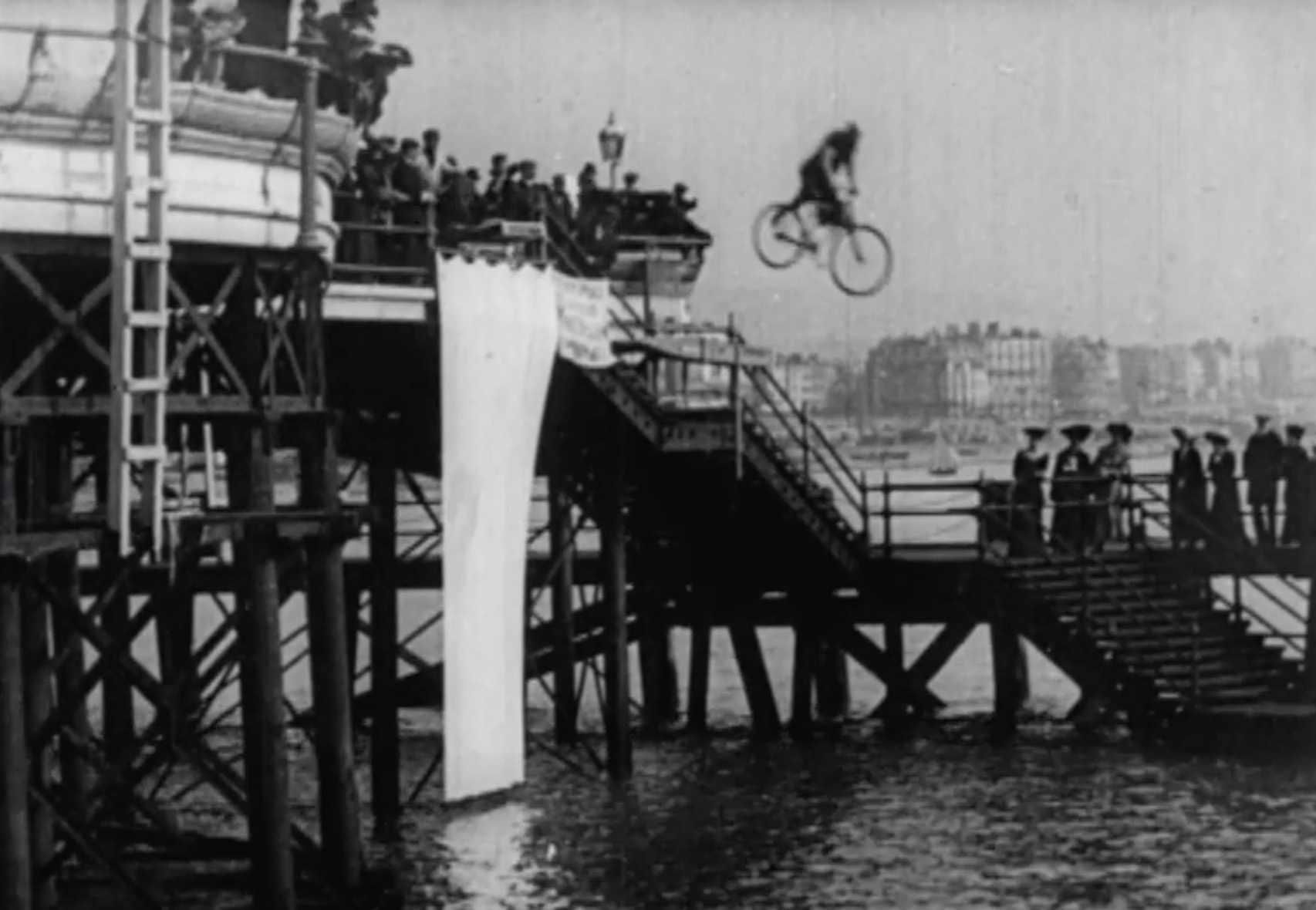
—This is a re-released version of Professor Reddish performs his Celebrated Bicycle Dive (see 1902), re-edited for comic effect. (December, 95ft.)
View online (BFI Player). View online (YouTube)
Her First Cake †
—A new wife’s first attempt at cake-making is dropped on the head of a passer-by, rejected by a tramp and finally used in building a wall. (May, 309ft.) A copy is in the National Film and Sound Archive, Australia.
The Miner’s Daughter †
—Romantic drama in 16 scenes. An artist asks if he can marry a miner’s daughter but is refused, so the couple elope and they establish a successful home. Years later the miner is injured in an under ground explosion (two red-tinted frames) but refuses his daughter’s visit to the hospital. The granddaughter finally brings the miner, his daughter and the artist together. (August, 586ft.)
Mrs Brown Goes Home to Her Mother
—A husband makes such a mess of the housework that his wife has to return. (July, 350ft.).
The Sham Sword Swallower
—Two tramps are chased by a policeman and the crowd who have been watching their fake show. (July, 350ft.) Released in the US by Williams, Brown & Earle, 12 October 1907.
Where There's a Will There's a Way
—Comedy in 18 scenes. A man elopes with girl by disguising himself as a gardener. Another man plays the piano and looks at a photograph of his sweetheart. He reads the newspaper classified ads and notices a vacancy for a gardener at his sweetheart's house. Disguised as a gardener, he is given a key by his employer for the gate. While he mows the lawn he gets closer to a woman sitting in a chair. He reveals that he is not the gardener by raising his beard and gives her the key for the gate. He motions his employer into the green house and locks him in. Outside the gate, relieved of his disguise, the man arrives in a chauffeur-driven car and helps the woman with her bag into the car. They drive off but another gardener, who has seen what happened releases the employer and they give chase in his chauffeur-driven car. The happy couple, notrealising they are being chased, stop outside an inn, change hats and set off for the church. The chauffeurtells the innkeeper what has happened and they disguise two sacks with the couple's hats and coats. The chauffeur drives off. The father, having been held up at a level crossing, is told at the inn that the couple have driven off. The father catches up but discovers that the couple are merely sacks. At the church the couple, now married, leave with the vicar. At the inn they find the car missing but the innkeeper explains. In the bar the couple are disturbed by the angry father. He calms down and accepts the marriage, giving them his blessing and toasting them in champagne.’ [adapted from National Film Archive catalogue description]. (September, 675ft.)
A Wicked Bounder
—Drama. (September, 550ft.)
• 1907
¶ G A Smith for Charles Urban Trading Company
The Great Football Cup Final
—The FA Cup, played at Crystal Palace on 20 April, when The Wednesday beat Everton 2-1. (April, 450ft.)
¶ James Williamson for Williamson Kinematograph Company
After the Fancy Dress Ball
—Comedy. A dancer dressed as Satan has trouble hailing a cab. Distributed by Gaumont. (July, 6 mins/360ft.) Released in the US 7 September 1907 by Kleine Optical Company.
Bobby's Birthday
—Comedy about a boy causing damage with a new football, ending in a chsse. (July, 212ft.) Released in the US by Williamson & Co, 15 February 1908.
The Brigand's Daughter
—A girl, plated by Winnie Barton, helps an artist to escape from bandits. They are chased onto a bridge, which is struck by lightning. (July, 806ft.) Released in Europe by Urban-Eclipse and in the US 8 August 1908 by Kleine Optical Company on 8 August 1908.
Brown Goes to Mother
—Distributed by Gaumont. (5½ mins/347ft.) Released in the US February 1907 by Kleine Optical Company.
Cheating the Sweep.
—Comedy; 'Where the soot went'. distributed by Gaumont. (January)
Getting Rid of His Dog
—Comedy about a man who fails to geet rid of his pet dog, whatwever he tries. (October, 310ft.) Released in the US by Williamson & Co, 4 April 1908.
Just in Time
—Historical adventure story, in which a boy sees a Puritan plant incriminating papers on a Royalist, whose fiancée rides off the secure Cromwell's pardon. (August, 540ft.) Released in the US by Williams, Brown & Earle, 19 October 1907.
Moving Day
—To save money a fatgher moves furniture in a wheelbarrow, causing him trouble. (September, 315ft.)
The Orange Peel
—Features Tom Williamson, who scatters orange peel to cause trouble. Distributed by Gaumont. (May, 245ft/260ft.) Released in the US 29 June 1907 by Kleine Optical Company.
The Orphans
—Pathetic drama in which a boy is jailed for stealing and then refuses to work. He robs from the house where his sister has been adopted. (November, 655ft.) Released in the US by Williamson & Co, 4 April 1908.
Pa Takes Up Physical Culture
US title: Poor Pa’s Folly
—Comedy in which father tries to copy a circus strong man but wrecks the house. (August, 305ft.) Released in the US by Williamson & Co, 25 January 1908.
The Village Fire Brigade
—Drama featuring the Hove brigade. 'A genuine and startlign spectacle of ahouse in flames.' Distributed by Gaumont. (January, 325ft.)
Why the Wedding Was Put Off
—Comedy. The groom arrives at the church in a mess after hurrying there.(August, 225ft.) Released in US by Williamson & Co, 25 January 1908.
• 1908
¶ G A Smith colour test films
Cat Studies †
Incident on Brighton Beach
Sailing and Motor Boat Scenes at Southwick
Alt title: Motor Boats and Yacht Races
—(460ft.)
View of the Brighton Seafront
Woman Draped in Patterned Handkerchiefs †
—Probably filmed outside Laboratory Lodge, Roman Crescent, Southwick. The ‘handkerchiefs’ appear to be the same pieces of fabric used in the test film of tartans (1906). (45 secs.)
¶ G A Smith for Natural Colour Kinematograph Company
A Visit to the Seaside
US title A Visit to the Seaside at Brighton Beach, England †
—The first film made in Kinemacolor (trade shown September 1908) and almost certainly the world's first completed colour film. It features scenes of Brighton, including a man peering at bathing girls and a girl falling from a boat, the White Coons and the Cameron Highlanders Band. The reason for there being two film lengths is probably that Kinemacolor used twice as much film, suggesting that the shorter version (half the length) was a monochrome copy for use in cinemas not equipped to show Kinemacolor. Moreover, one version was released by GAS Films and Charles Urban Trading Company, the other by Natural Colour Kinematograph Company. (September, mono 517ft/colour 1,035ft) Released in the US by Kinemacolor Co. of America in December 1910.
• (Probably) not shot in Brighton for Kinemacolor
Animal and Bird Studies
—(1,275ft.)
Band of the Queen's Highlanders
British Soldiers
—Compilation totalling 840ft.
Church Parade of the 7th Hussars and 16th Lancers.
A Detachment of Gordon Highlanders.
The Letter.
The Rabbits, Sheep, A Carrot for the Donkey
Alt title: Farmyard Friends
— (1,155ft.)
Reaping
Alt title: The Harvest
—(740ft.)
Review of the British Navy
—(335ft.)
The Soldier's Pet
Swans
A Visit to Aldershot
¶ James Williamson for Williamson Kinematograph Company.
Some may not have been directed by Williamson himself (known to be his are marked #), although there is scant information about who may have been the director.
The Ayah's Revenge
—Crime story set in the India of the Raj: an Indian nurse steals an officer’s baby after she is sacked. The mother catches and shoots the nurse. Features Florence Williamson as the mother. (September, 555ft or 660ft.) Released in the US by Film Import and Trading Company, 2 October 1908.
A Countryman's Day in Town
—A yokel has misadventures at the waxworks and with the police and fire brighade. (December, 350ft.)
A Day's Holiday
—Comedy about a family forced to spend the holiday at home. (February, 495ft.)
# The Great Bargain Sale
—Comedy. A man has trouble carrying all his wife's purchases. (September, 460ft.)
The £100 Reward †
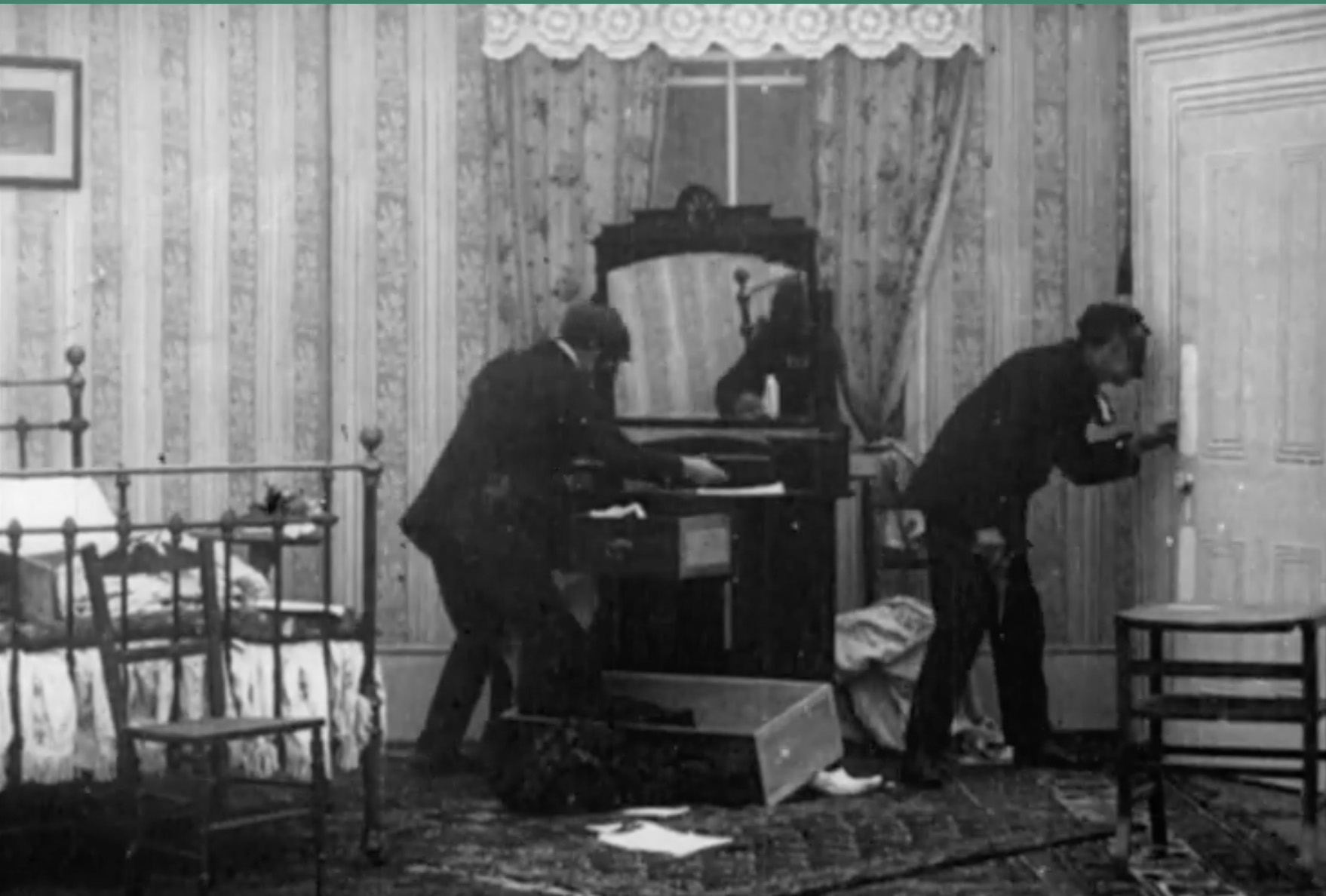 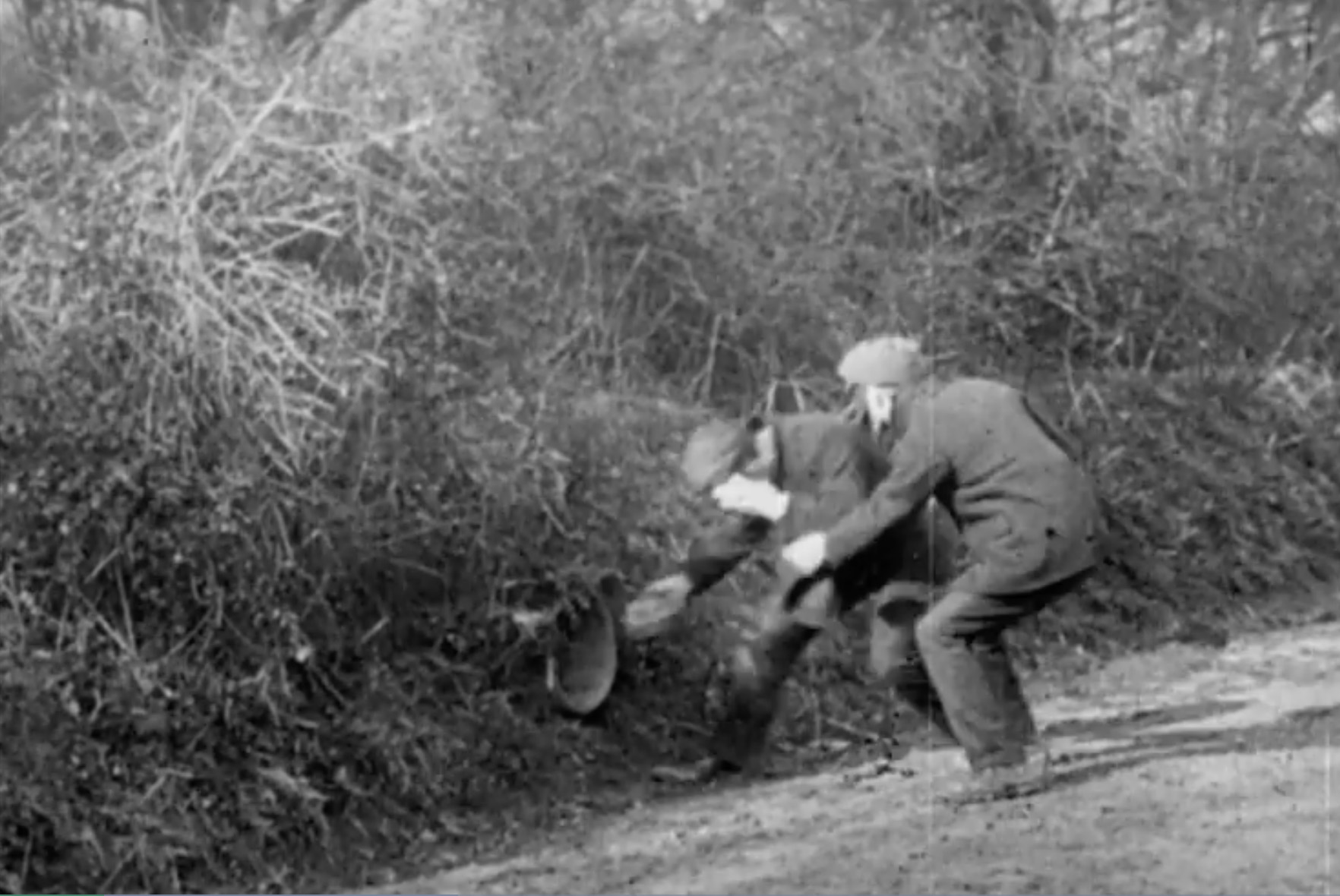 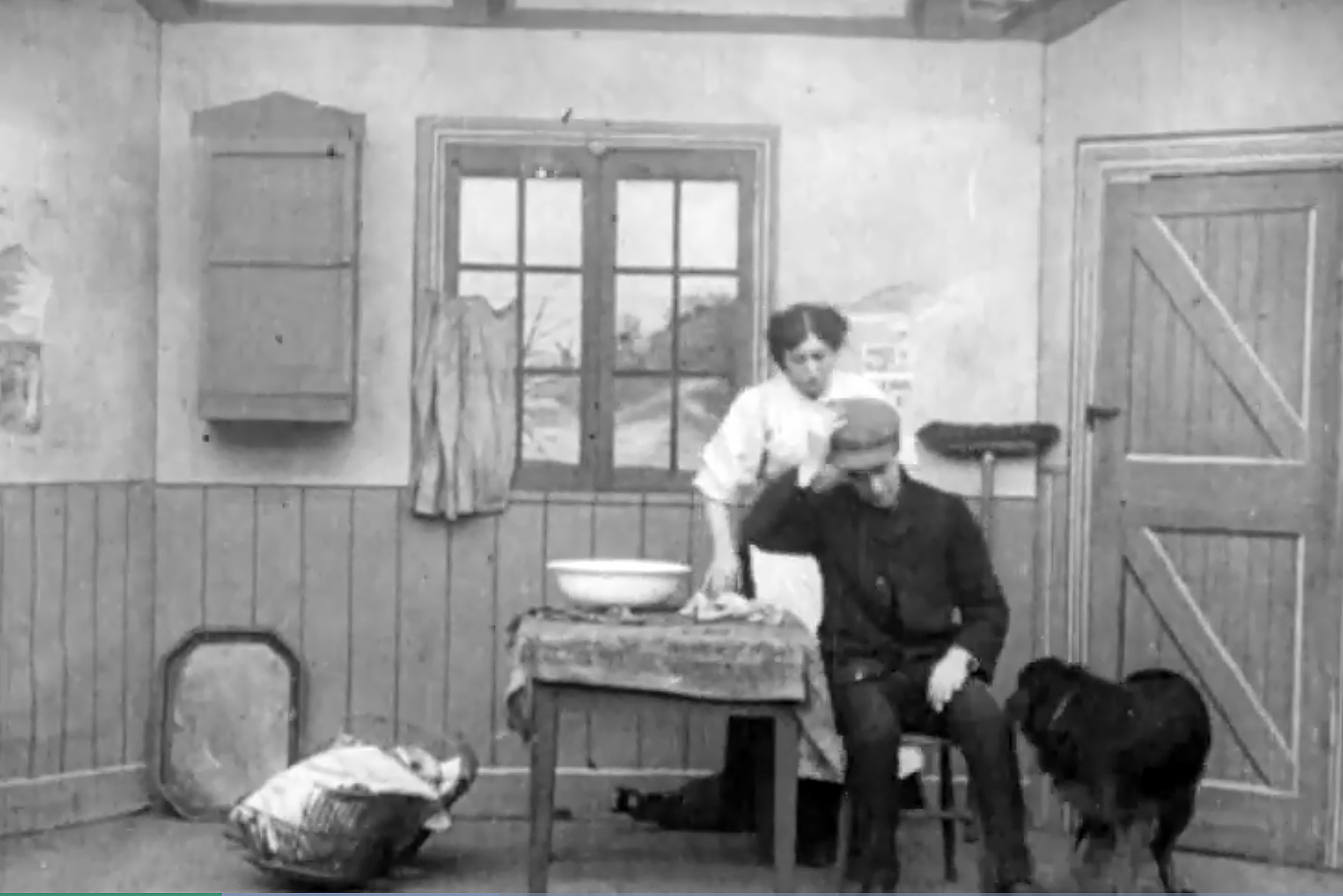
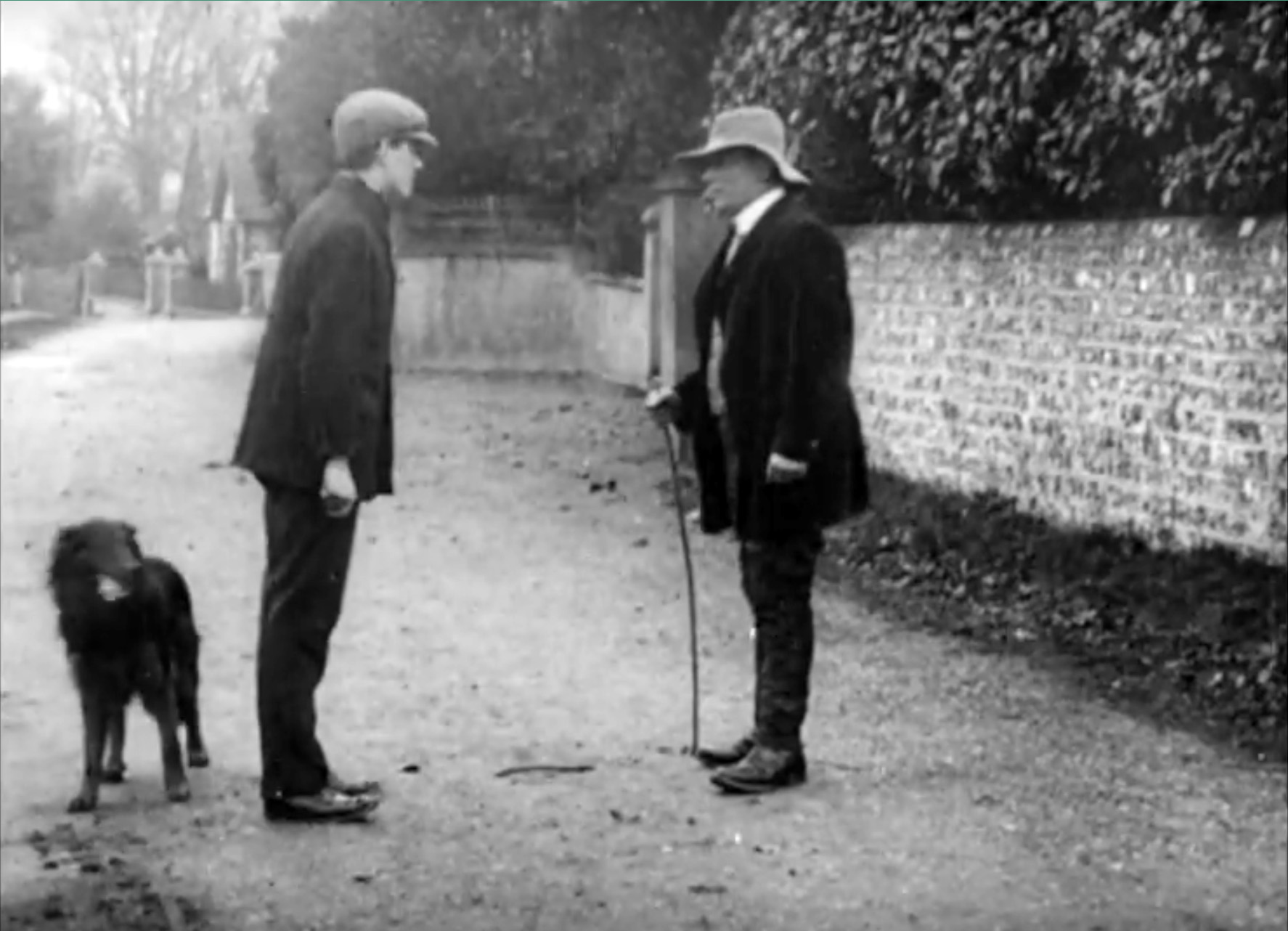 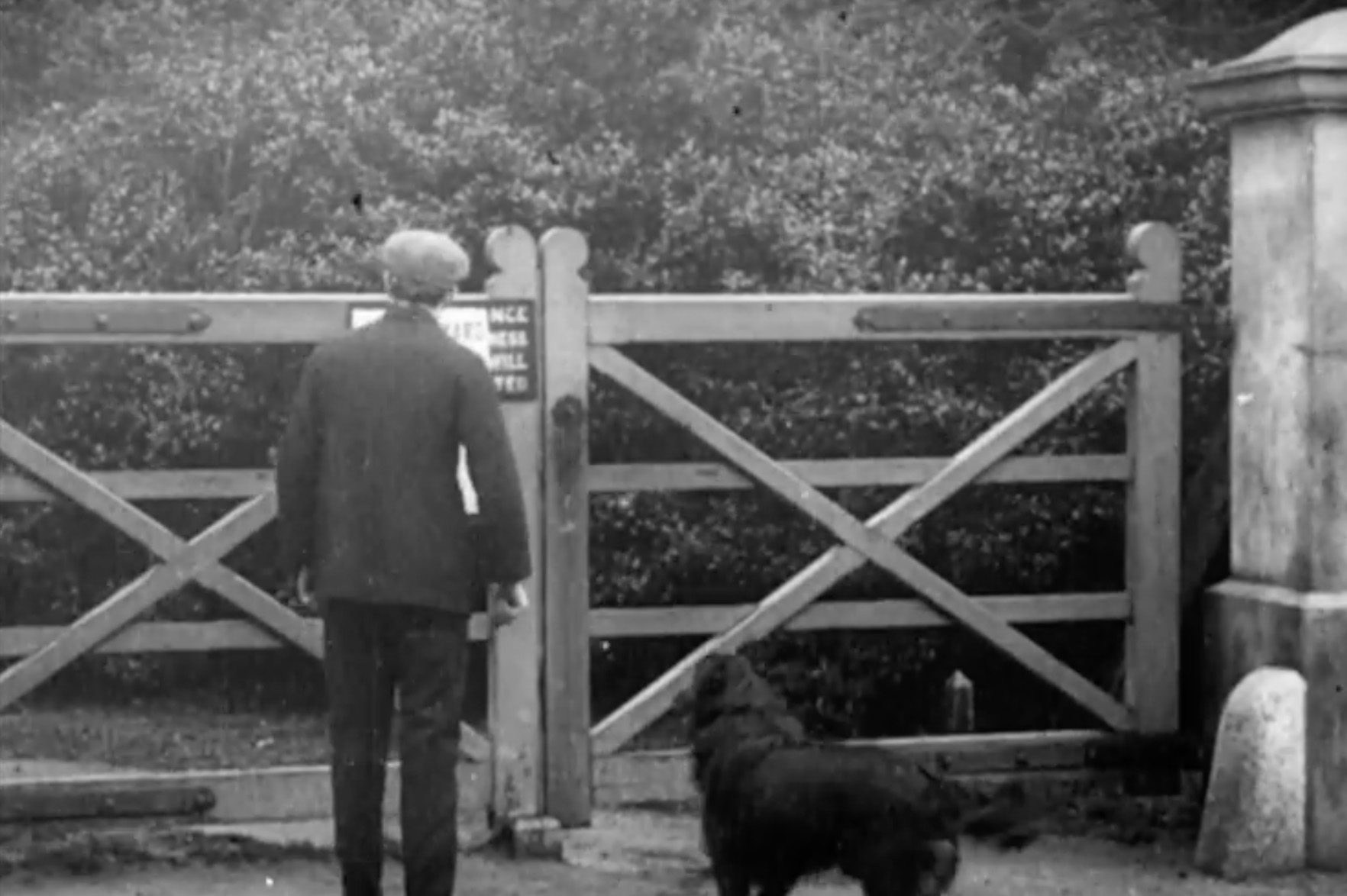 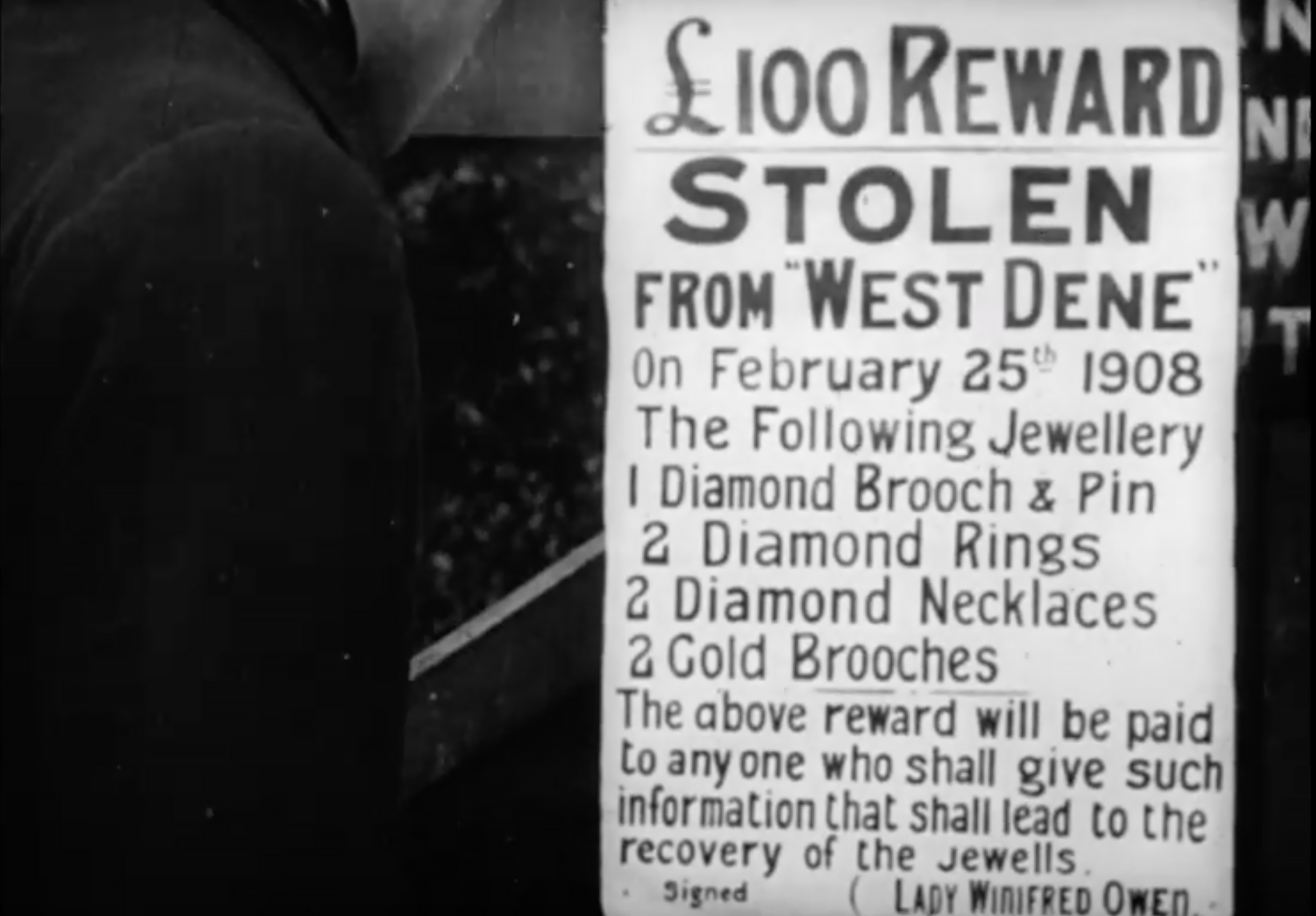
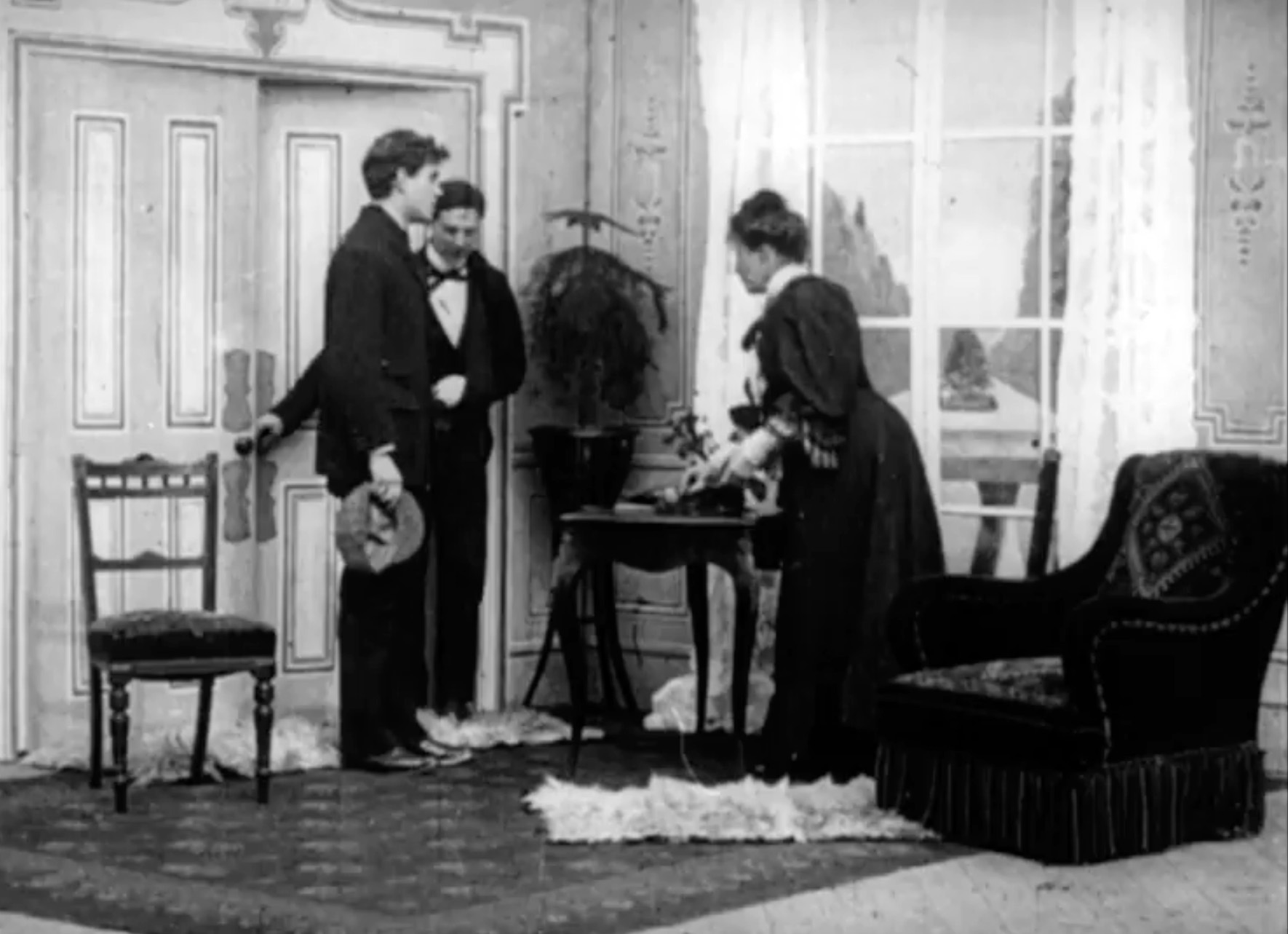 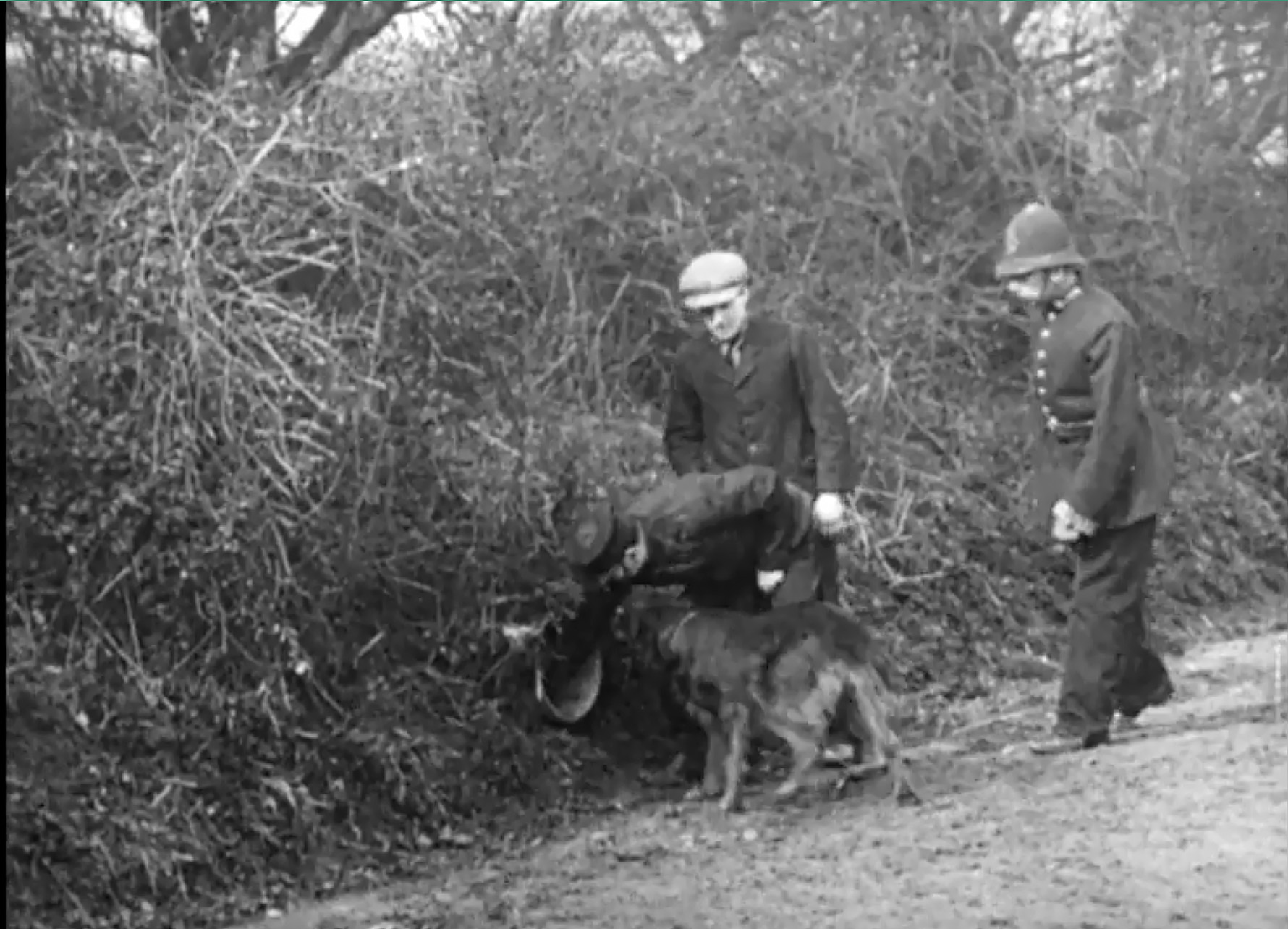 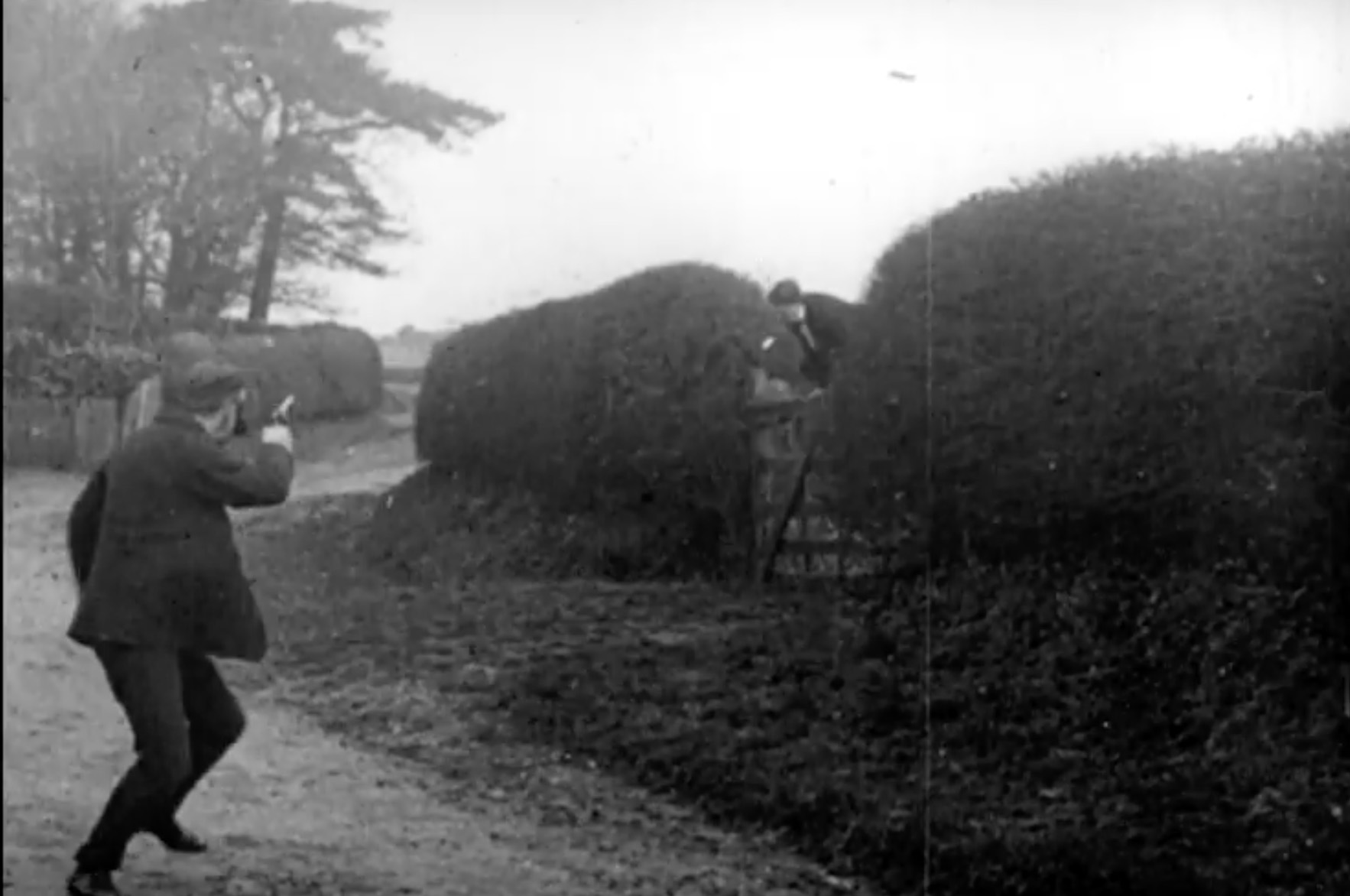
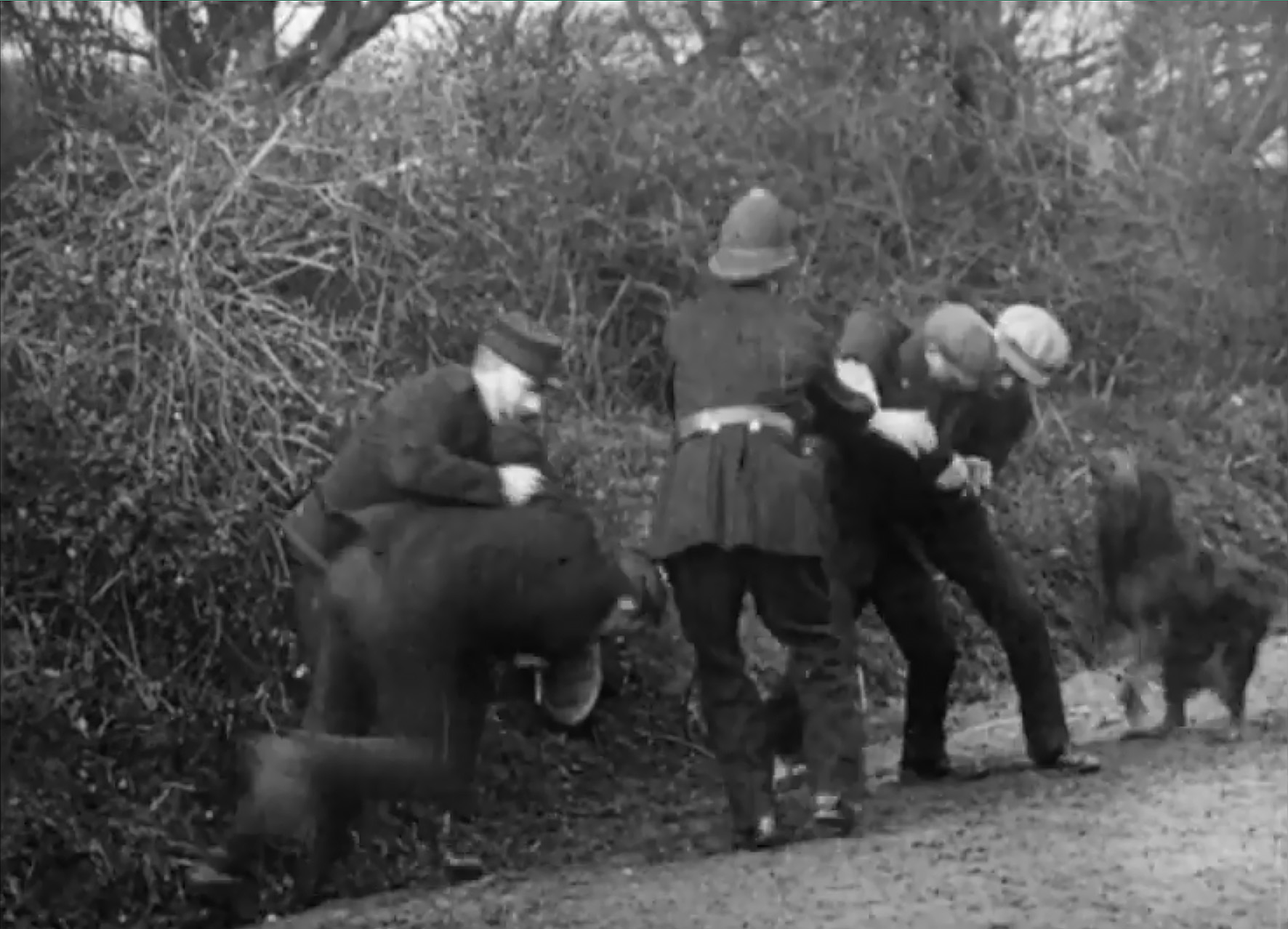 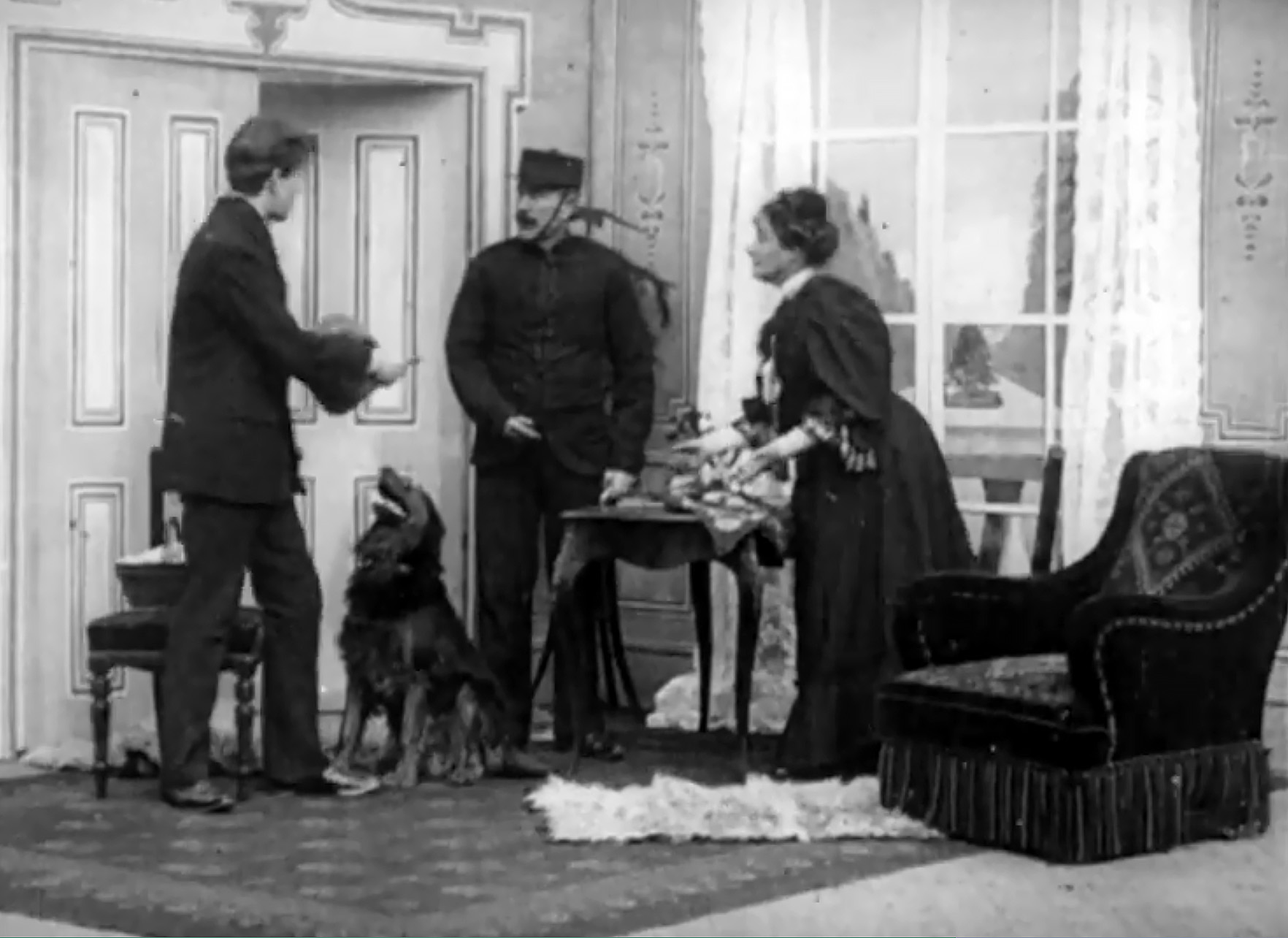 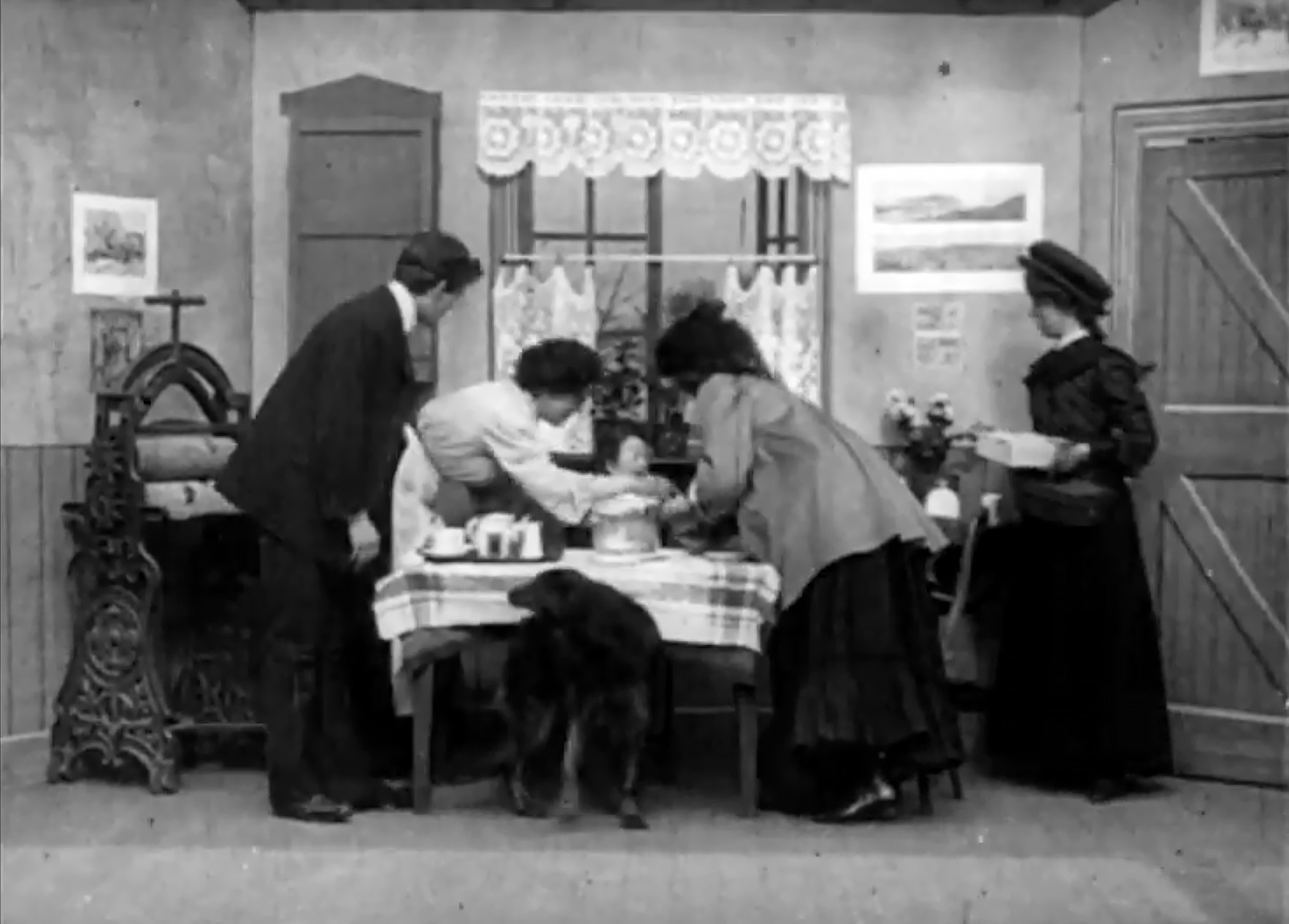
—Thieves break into a dressing table, steal jewels that they hide in a drain while making their getaway. A poor man returns home from work to be shown an empty cupboard by his wife. He takes the dog out with the intention of selling it. An elderly gentleman pays for the dog but the man changes his mind. The dog finds the jewels, which the man returns to their lady owner, who gives him the reward. Near the drain, the police nab the thieves, one of whom shoots a gun. Back at his cottage, the man and his wife are visited by the lady and her maid, who give his dog a new collar. (April, 400ft, 6 mins.) Released in the US by Williamson & Co, 11 April 1908.
View online (BFI Player View online (YouTube)
# The Little Mother
—Drama. A widowed sailor returns to save his children from being evicted. (September, 620ft.)
My Wife's Dog
—Man tries to catch the wrong Dalmatian. (August, 373ft.) Released in the US by Film Import and Trading Co, 3 October 1908.
The Professor's Great Discovery
—Comedy about a professor's patented snuff causes people to dance. (April, 350ft.)
# The Reconciliation
—Pathetic drama. ‘A squire's disowned son is shot while poaching to feed his starving wife’ [IMDb] (October, 360ft.)
# The Rent Collector
—A rent collector is paid with water, flour and soot. (December, 360ft.)
The Rival Cyclists †
—This is the National Film Archive catalogue description: ‘A young lady leaves her house. As she waits a young man on a bicycle rides up, with a spare bicycle. She is admiring this, when a second young man arrives with a bicycle with a trailer on the back of it. She then decides to ride with him, steps into the trailer and they cycle off, leaving the first young man raging. Down a country lane the coupling snaps, the trailer comes off and the young man rides off uphill, leaving the lady sitting on a bank weeping. He rides on and further down the lane passes two boys, one pushing the other in a soap box on wheels. The larger boy hitches the soap box to the cyclist, who rides steadily on to the boy's amusement. When the cyclist reaches level ground he gathers speed and the boy fetches his mother who comes out and rushes after the fast disappearing cyclist with his soap box passenger. Three men sit drinking outside a pub and roar with laughter as the cyclist passes. When the mother rushes up and tells them what has happened, they join in the chase. Meanwhile, the young lady is still sitting by the roadside. The other cyclist comes along and she tells him what has happened. He then hitches the trailer to his bicycle and they drive off together.’ (March, 246ft but incomplete.) Released in the US by Chicago Film Exchange, 24 April 1909.
# She Would Be a Suffragette
Alt title: The Suffragette
—Topical comedy in which a henpecked husband dresses in disguide and goes to the suffragette meeting. (April, 235ft.)
The Story of an Egg
—(163ft.) Released in the US by Williamson & Co, 15 February 1908.
Struck
—Released in the US by Williamson & Co, 4 April 1908.
# Sunshine After Storm
—Drama of a Salvationist saving a suicide=al drunkard who is later ship wrecked while escoring emigrants but is saved by his ex-wife. (October, 890ft.) Released in the US by Empire, 26 June 1909.
Terrors of the Deep
—Released in the US by Williamson & Co, 4 April 1908.
# That Terrible Fly
—Comedy.
The Tower of London
—Drama based on Harrison Ainsworth's historical novel, set in 1553 in which the lord escapes from a jealous jailor to marry a lady's maid. May not be directed by Williamson—according to Stanley Mumford it was directed by a Mr Thompson. The longest film yet (indeed, ever) from the Williamson studio, running for about 19 minutes. Included in Williamson’s catalogue for September 1908 but not released until March 1909. (1,125ft) Released in the US by Empire, 15 May 1909.
# Uncle Algy Proves a Good Detective
—Comedy.
Uncle's Picnic
—Two naughty boys disrupt a picnic in the country. (May, 400ft.)
¶ Jack Chart for Williamson Kinematograph Company
The Bully and the Recruit
—Features Chart as a recruit falsely charged with stealing a belt and George V Wibrough as a bully; the recruit is saved by a bugler. (May, 350ft.) Released in US by Empire Film Company on 26 June 1909.
How They Made a Man of Billy Brown
—Features Jack Chart as a bumpkin who makes good after joining the Territorials. Released May 1909. (575ft.)
Raised from the Ranks
—Features Jack Chart as a commissioned ex-private taunted by fellow officers until he saves the flag from a fire. (November, 360ft.)
Still Worthy of the Name
—Wartime drama in 11 scenes about a cardsharp who is saved by a policeman from committiung suicide , then joins the Lancers and wins the VC. Features Jack Chart. (August, 520ft.)
¶ Oliver G Pike for Williamson Kinematograph Company
St Kilda, Its People and Birds
—Pioneering wildlife documentary about the remote Hebridean island community. (330ft.)
View online.
¶ E J Spitta for Williamson Kinematograph Company
Nature's Hidden Beauties—Pond Life
—Pioneering natural history film of close-ups of pond life. Probably the earliest film of microscopic life, made by Spitta at the Wilbury Villas studio.
View online.
• 1909
• G A Smith
Smith is now making Kinemacolor films for the Natural Colour Kinematograph Company (established in March 1909); 32 titles (41 films) are listed here. A programme of 21 Kinemacolor films is shown to a paying audience at the Palace Theatre, Shaftesbury Avenue, London on 26 February 1909—the world's first commercial colour film presentation.
An Anxious Foster Mother
—Nature.
Cart Horse Parade
—(345ft.)
Choosing the Wallpaper
—A short black and white drama featuring a shopkeeper helping a women to select wallpaper, made for the Natural Colour Kinematograph Company. (September, 215ft.)
Donkey Riding at Brighton
Kinemacolor Puzzle
—Two coloured discs rotate against each other to produce varying colours. (September, 195ft.)
Natural Colour Portraiture
—12 studies, seven of them shot by Smith, including a remake of Scandal over the Teacups . (MArch, 375ft/750ft.)
Our Farmyard Friends series.
—Compilation of animal subjects, some previously listed: Luncheon on Straw, Among the Sheep, Feeding a Lamb, the Parrot, Donkey and Carrot, Mesmerised Rooster, Rabbits, Cattle, Horses, Cat at Toilet, Kitten and Parrot, etc
Our Floral Friends
Alt title Sweet Flowers
—Compilation of 10 studies.
• Not shot in Brighton.
A number of Kinemacolor films previously attributed to Smith in 1909 are omitted from this list on the basis of a contemporary account in Moving Picture World (18 December 1909) of the New York premiere of Kinemacolor at Madison Square Garden on 11 December 1909. That account included a list of the films presented and identified which had been made by Smith and marked a number of them as having been filmed by John Mackenzie in the South of France, Berlin and the USA. However, Smith had visited Turkey. The Review of British Navy at Southend and Spithead series was filmed by Charles Urban himself.
The Chef's Preparations
—(1,090ft.)
Empire Day Procession.
King and Queen Open the Victoria and Albert Museum
—The event took place on 26 June 1909.
King Edward at Kensington
—Probably at the same time as the previous entry.
The King and Queen Driving Through London.
The King at Knowsley
The King's Derby
The River Thames
—(965ft.)
Scenes on Galata Bridge, Constantinople.
Royal Ascot
Scottish Lassie
The Soldier's Pet
Visit of Lords of the Admiralty to HMS Dreadnought
¶ James Williamson for Williamson Kinematograph Company
¶ Some may not have been directed by Williamson himself (known to be his are marked #)
'Arry and 'Arriet's Evening Out
Alt title 'Arry and 'Arriet's Day Out
—A costermonger couple cause trouble in the gallery at a music hall. (January, 345ft.)
# The Letter Box Thief
Alt title The Letter Thief
—Comedy. A policeman hides in a letter box to catch a thief. A boy puts a firework through the slot, causing the policeman to fly through the air, landing where the thief is found. (February, 215ft.)
# Saved by a Dream
—Drama about a gambler who dreams he loses everything and is jailed, leading to his reform.` (February, 485ft.)
¶ David Aylott for Williamson Kinematograph Company
And Then He Woke Up
—Featuring Ernie Cornford who dreams of saving the life of a rich girl (Margaret Scudamore) and marries her. (September, 300ft.) Margaret Scudamore (1884-1958)—real name Daisy Scudamore—was the mother of (Sir) Michael Redgrave. This was her only known silent film role, although later in life she appeared in seven sound features, including A Canterbury Tale as Mrs Colpeper and uncredited in Black Narcissus.
The Boy and the Convict †

—Drama based on Charles Dickens' Great Expectations. Aylott plays the convict, Stuart Williamson the boy. Photographed by Henry Ssanders.The non-studio scenes were shot at St Helen's churchyard in Hangleton and at the smithy in Poynings Road, Poynings; a sign on the wall advertises the nearby Royal Oak Hotel and Tea Garden and the convict evades the pursuing warders at Shoreham harbour. The kitchen, log cabin in New South Wales, the office, the prison infirmary and the living room, however, are crude cardboard sets in the Wilbury studio—a shortcoming noted by critics at the time. Issued as a tinted print. (May, 750ft/12 mins.) Released in the US by Williamson & Co, 13 September 1909. Available on the BFI DVD Dickens Before Sound.
View online.
A Dash for Help
—‘A native rising affects communication lines of fort. Before telegraph wires are completely severed a group of soldiers fight their way through. The officer survives long enough to send a message. Highlanders come to the rescue.’ [BFI synopsis.] (June, 515ft.)
For Her Sake
Alt title Two Sailors and a Girl
—In South Africa a corporal is wounded while saving a rival from an attack by Zulus, featuring Aylott as the officer and Anita March as the RSM's wife. (July, 590ft.)
Gingerbread
—Comedy featuring Stuart Williamson as a boy bribed by an ice-cream seller to put pepper in the baker's gingerbread. (August, 400ft.) Distributed by Warwick Trading Co.
Scouts to the Rescue
—Chase film, featuring Frank and Mrs Sutherland as the gypsy couple, Aylott and Anita March as Farmer and Mrs Giles. (June, 550ft.) Released in the US by Empire, 4 September 1909.
Scratch as Scratch Can
—Practical joker sprinkles itching powder. (September, 410ft.) Released in the US by G W Bradenburgh, 4 June 1910.
Sorry, Can't Stop
—featuring Bill Haley as Auntie and Stuart Williamson as a boy who attaches roller skates while she sleeps.
Squaring the Account
—A sacked packer creates confision by mixing up parcels. Possibly not directed by Aylott. (June, 370ft.) Released in the US by Empire, 28 August 1909.
Two Naughty Boys †
—Revival of the 1898 series featuring Stuart and Tom Williamson, ending with the inevitable chase. (July, 375ft.)
View online.
The Unwelcome Chaperone
—Comedy about a cortign couple who strand an intrusive aunt in a boat on the river, featuring Bill Haley as Auntie, Ernie Cornford as The Beau and Anita March as The Girl. (July, 400ft.)
¶ Oliver Pike for Williamson Kinematograph Company, filmed away from Hove
Peeps into Nature’s Realm †
—A compilation of scenes of animal life, the second in a series. c320ft.)
¶ Edmund J Spitta for Williamson Kinematograph Company
Brighton Aquarium series †
—Various scenes of marine life. (Possible total c1,400ft).
¶ Leo Stormont for Warwick Trading Company
England Invaded

—A comedy, written by director Leo Stormont, based on a popular theme in fiction at the time, mixing fiction and actuality footage, with songs to promote recruitment into the Territorials. Shot at Devil's Dyke, north of Brighton, with a cast that included Leo Stormont, members of Hove Mummers amateur dramatic company and the 4th Dragoon Guards from Preston Barracks.(March.) It was premiered at the Coliseum Theatre, London on 22 February 1909, with Stormont narrating, and shown locally at the Court Theatre and later at Hove Town Hall. The advert is from The Music Hall and Theatre Review (2 March 1909)—click to enlarge in new window.
• 1910
¶ Theo Frenkel for Natural Colour Kinematograph Company
• Filming location of all titles in Kinemacolor is uncertain but is stated below when known not to have been shot in the studio at Cambridge Grove, Hove
Oedipus Rex
—Adapted from Sophocles' play, featuring Frenkel as Oedipus and Suzanne de Baere as Iocasta; This may have been shot at the Kinemacolor studio in Nice. Released 11 January 1911. (56 mins.) [Frenkel's brother Louis Bouwmeester appeared in a Dutch version of the story made in 1912.]
The Bully
—IMDb says this was shot in Chicago, Illinois.
The Coster's Wedding
The Old Hat
¶ G A Smith for Natural Colour Kinematograph Company
Barnyard Pets
—(680ft.)
Big Waves at Brighton
—(320ft.)
Choice Bouquets
—(685ft.)
The Dinner Party
—(170ft.)
Fording the River
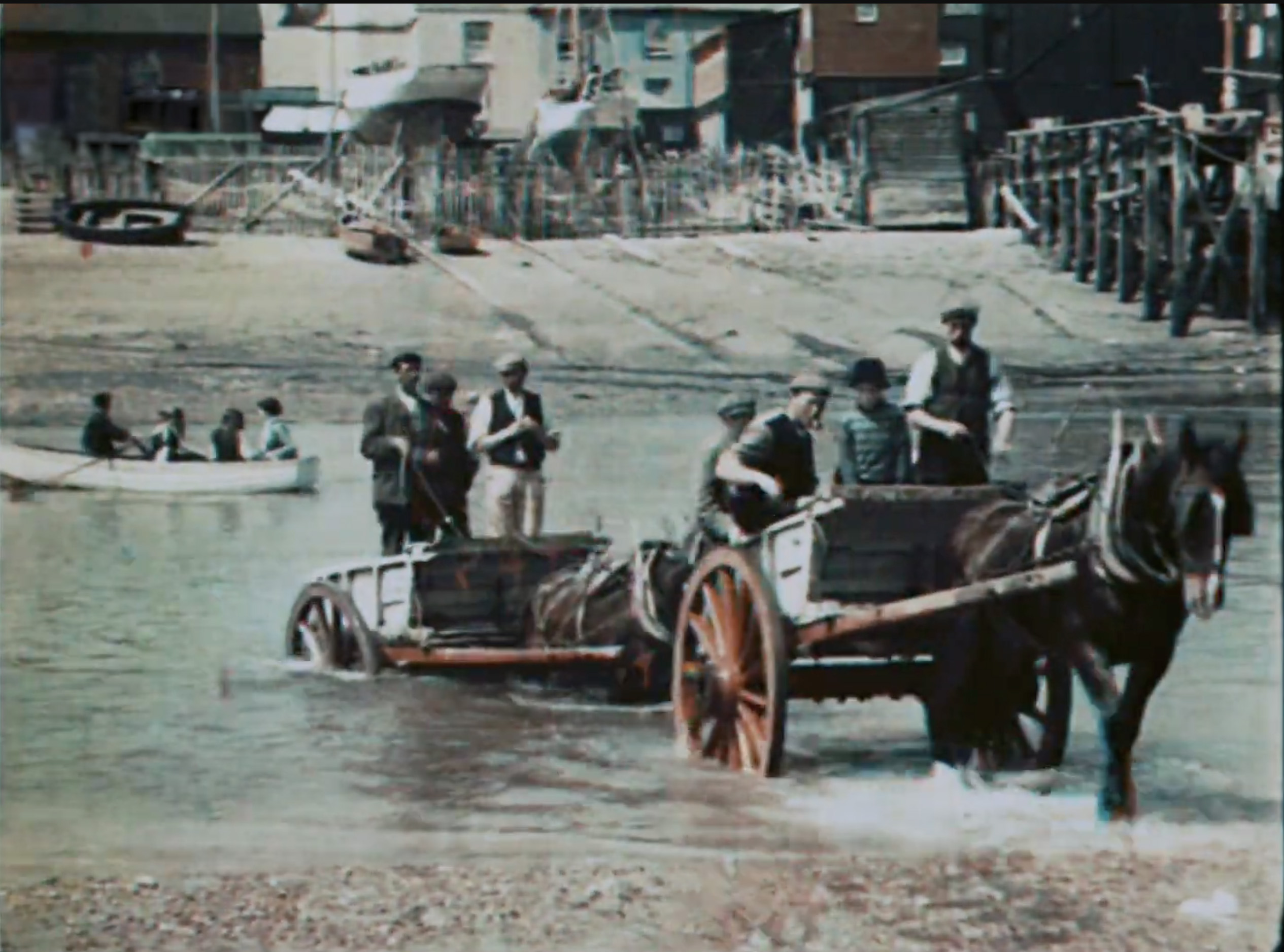
— 'The ability of Kinemacolor to rival and even excel the work of the academicians is demonstrated in this picture, which, containing nothing more than views of horses drawing tumbril carts across a stream, achieves a veritable artistic triumph. If an artist could get these colors, the limpidity and translucence of the water, and the atmosphere of reality that pervades the picture, he would be hailed as the greatest master of his craft. Besides doing all this Kinemacolor gives us the scene in movement, the splashing and rippling of the water, the ordinary, nondescript, everyday colors of earth-stained farm carts and shaggy, ungroomed horses. It is indeed an Academy picture with life and movement.
'A second portion of the film gives the same scene at evening. The reflection of the blue sky has gone from the water, the shadows have lengthened and the shades of night are falling. The softness and peace of a midsummer evening—qualities elusive yet familiar to all—are here preserved and may be recalled at will to gladden the spirit in winter’s gloom.' [Kinemacolor catalogue] Possibly filmed at Shoreham. (330ft.)
View online
Liquers and Cigars
—(510ft.)
Our Gem of a Cook
—(680ft.)
Polarised Light
—(675ft.)
Refreshments
—(480ft.)
• Definitely not shot in Brighton. Some of these film titles, colour 'travelogue' footage in Kinemacolor, suggest a similar approach by Smith and Urban to that of Claude Friese-Greene 15 years later using the rival Biocolour system. The patent court case brought by Friese-Greene's father in 1914 against G A Smith and Charles Urban did much to curtail the development of colour cinematography in Britain.
American Passengers per SS Cedric
—(840ft.)
British Coast Towns
—(790ft.)
Caernarvon to Conway
—(850ft.)
Change of Guard at St James's Palace
—(485ft.)
England to France via Newhaven and Dieppe
—(645ft.)
Glories of the Upper Thames
—(790ft.)
Happy Days on the Sea Shore
—(390ft.)
Launch of SS Olympic
—(550ft.)
A London Fire Call
—(265ft.)
Minden Day at Tidworth 495ft.)
Mr Roosevelt's Casket
—(245ft.)
On the River Avon, Stratford 650ft.
Pageant of New Romney, Hythe and Sandwich

[Photo: BFI]
—(300ft.)
Picturesque Devonshire
—(990ft.)
Picturesque North Wales
—(950ft.)
Portsmouth to Ryde, Isle of Wight
—(620ft.)
The Queen Mother's Flag Over Buckingham Palace
—(55ft.)
A Run with the Exmoor Staghounds
—(1,000ft.)
Scenes at English Race Meetings
—(720ft.)
Scenes at Ventnor, Isle of Wight
—(1,040ft.)
Scenes in Cornwall
—(820ft.)
Scenes in the Isle of Wight
—(940ft.)
Shakespeare Land
—(505ft.)
Sports on the River Thames
—(110ft.)
Strawberry Harvest
—(425ft.)
Submarine and Torpedo Destroyers
—(630ft.)
¶ James Williamson for Williamson Kinematograph Company
The History of a Butterfly: A Romance of Insect Life
—Pioneering natural history filming. (10 mins.)
Local newsreels were shot in 1910 and later by Eddie Scriven and shown at the Empire Picture Theatre.
Page revised 20 February 2026
© David Fisher
|
